Monthly Archives: March 2011

How to deal with a damaged catalytic converter

catcon2

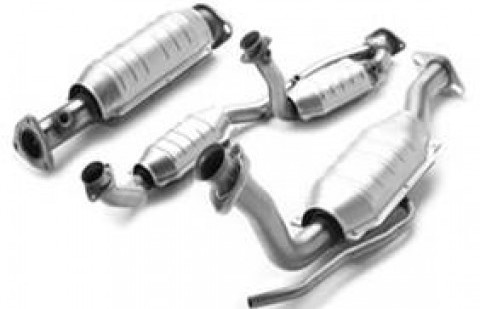
The catalytic converter is the component that functions to lessen the toxicity of emissions from an internal combustion engine.  A defective catalytic converter can influence the damage of your engine, so it must never be taken lightly.  Here are some tips to help you spot a damaged converter.

Basically, a catalytic converter is defective when it becomes clogged, poisoned or shows sign of physical damage.  When it becomes clogged, you may feel in a decline in vehicle performance and a noticeable drop in fuel economy levels.  This is because if your convertor is clogged, it will trap exhaust gas in front of the catalyst. When this gas it trapped, it creates back-pressure that can prevent the engine from breathing normally.  Then, the higher back-pressure can also result in the engine quitting after a few minutes of driving, or at least make the engine feel like it is starved of more fuel.  In some cases, you may hear a whistling sound when the throttle is applied indicating a restricted exhaust flow or catalytic converter problem. 

One of the telltale signs of a catalytic converter problem is when you hear rattling noises coming from the catalyst, which sound like they have broken apart from the converter casing or converter shell.  You can observe these strange noises more as the car is idling or decreasing in volume as speed is increased.  If you discover that your converter has failed, you should try to determine why exactly it has failed in order to avoid the same problem in the future.

Causes of failure

One common cause for failure is a defective oxygen sensor.  Another is failing to schedule a tune-up on time.  A defective oxygen sensor (O2 sensor) can cause the engine to run out of tune causing the converter to break down.  Keep in mind that oxygen sensors should be replaced regularly according to your vehicle manufacturer specifications, as they are a regular maintenance item.  What you can do is to change your oxygen sensor on a regular basis with a reliable brand.   

The good news is that there are currently many choices of catalytic converters out in the market that may fit your vehicle.  One choice is a direct fit catalytic convertor which can be bolted up even without welding.  Or if you prefer to go for increased performance, there are also several high performance converters to choose from.  A high flow catalytic converter matched with a performance cat back exhaust system will help you have increased horsepower because the lower back-pressure will let your engine breathe better.

Whatever choice you make, you can select from a variety of catalytic converters on our large catalogue of vehicle components.  Choose the right one that fits your car from a range of high-quality and reliable parts.  Go to autopartsway.com to learn more.

Tips and Tricks for Clutch Repair Jobs

clutch repair

The clutch is that part of your vehicle that controls the slippage between the engine and the transmission.  The vehicle’s wheels don’t spin when the engine does, so the function of the clutch is to let the wheel disconnect from the engine.  This will allow the driver to change gears and the car to stop without killing the engine.  Here are a few tips, tricks and some timesavers that you need to know about the clutch.

  • It you overheat the clutch, it can critically weaken the flywheel.  If you observe a cooked clutch, you must remove the flywheel and have it Magnafluxed in order to ensure that there would not be any radial or any other cracks leading away from the bolt holes.
  • The input shaft splines should be able to freely slide back and forth when you test the new disc.  If this does not happen, a rust or a small nick may be hanging it up.  You can use a fine hand file or emery cloth to get rid of an of those small nicks or burrs in the input shaft splines or clutch hub.
  • You must test fit the pressure plate of the flywheel prior to the final assembly to recognize any interference problems or binding on the locating dowels.
  • Remember that a curved face throw-out bearing must always be used with straight pressure plate levers; and conversely, a flat-faced throw-out bearing must always be used with curved pressure plate levers.
  • The flywheel must be smooth and flat for the clutch disc to have the appropriate grip.  If there are visible signs of scoring, uneven wear or burn marks, you should have the flywheel resurfaced.  A light cut can be taken off the face and result in a much better performance.
  • Keep in mind to mark the location of the flywheel at all times before unbolting.  This helps you to reinstall it in the exact same position, and it is very important to maintain engine balance on some applications.
  • Each time you have a flywheel resurfaced, you must check the mounting hole counterbore depths.  Removing too much material leads to the pressure plate mounting bolts to run out of thread.  Then, the pressure plate cover won’t be pulled down solidly against the flywheel.  Double checking is key.
  • If the flywheel has not been removed, it is always a good idea to re-torque the mounting bolts in a crisscross pattern according to your vehicle manufacturer’s specifications.
  • Before reassembling the clutch, the flywheel and pressure plate must be carefully cleaned with a non-petroleum based solvent, and then dried with compressed air.  Do not use wiping cloth or rags in drying the parts. 
  • Use a high-temperature grease to lightly coat the input shaft splines, clutch hub, and throw-out bearing hub and face.  This will help you make sure that everything is working smoothly.
  • It is necessary to use proper alignment tools, and if you do not have one yet, avoid blind-guessing to line up the clutch with the pilot bearing.  Otherwise, you will spend a long time trying to force the transaxle into a misaligned clutch.
  • Make sure to install the disc in the correct direction with the hub assembly away from the flywheel.
  • Upon installation, the pressure plate mounting bolts finger must be locked-in tight.  Then, torque them gradually in a crisscross pattern to keep the pressure even around the circumference of the pressure plate.
  • Use new high-strength fasteners and lock washers at all times in changing a clutch assemble and a thread lock in order to help the bolts avoid working loose.
  • Check the release lever for any wear or misalignment.  Then, remember to lubricate the clutch release lever contact points and pivot before the final assembly.
  • Don’t allow the weight of the transmission to hang from the disc.  Make sure that the engine and transmission are fully mated together before you relieve the transmission support.
  • If you have any doubt about any component, it is wise to consider replacement.  If you keep using or re-using a damaged part like a pilot bearing or a throw-out bearing, it will only cost you more in the future.

Finally, always test drive a new clutch job before delivery to make sure that everything is operating properly. 

If you would like to purchase high quality car components with great discounts, check out our website at autopartsway.com.

Troubleshooting the Starter and Vehicle Starting Circuit

engine starter

Before performing the tips in this article, it would be best if you conduct a starter performance test using an alternator or starter test bench.  In doing this, if the starter is not performing well, it is necessary to resolve any additional vehicle side problem in the starting circuit that may have affected the starter.  On the other hand, if the starter meets your vehicle manufacturer’s specifications, you should also look up the service manual in order to inspect the car’s starting circuit and to be able to identify the problem and possible solutions.  Then, in order to identify the true starting circuit problem, you can use the following troubleshooting questions.

  1. Does the starter turn the engine too slowly?  If so, verify the battery charge, battery cables, ignition timing, engine oil and engine modifications.  You should check if the battery is fully charged, and if the battery cables and terminals are in good condition.  If the engine has been modified and has increased compression ratio, these could influence the starter’s inability to turn the engine.  Note that improper engine timing, if it is more advanced, or if the engine oil is excessively viscous, these are also factors affecting the starter’s performance.
  2. Does the starter fail to crank the engine?  If the answer is yes, you must check the battery, the battery cables and the terminals.  Make sure that both the ends of the battery cables are inspected for proper connection and are kept clean.
  3. Does the starter try to turn the engine, but then just spins free? When this happens, check the flywheel ring gear or the flex plate, and inspect if there is excessive wear and missing or damaged teeth.  Similar symptoms would be found in failed starter drives.  Then, the flywheel teeth can be inspected through the starter access or mounting opening.  In order to find excessive wear, check areas such as the four cylinder engines, two positions, 180 degrees apart, six cylinder engines, two positions, 120 degrees apart and eight cylinder engines four positions, 90 degrees apart.
  4. Does the starter click when trying to start the engine?  Supporting questions to this are, has the ground circuit between the battery and the engine been checked for high resistance?  Or have the battery cables and terminals been inspected for damage, wear, corrosion and loose connections?  If the solenoid or relay clicks and your starter fail to turn, your problem could be a loose connection, or some damage in the wires.  Then, you should check the battery cables’ voltage drop to ensure that the resistance is high enough to meet the vehicle manufacturer’s recommendation.
  5. Is there a clattering sound when trying to start the engine?  If you hear such noise, one possible cause is a bad flywheel or ring gear.  Another possibility could be an inoperable starter solenoid or low battery voltage.  Make sure that your battery is fully charged, and all the battery cables and terminals remain in good condition.

Finally, keep in mind that these tips are mainly general information for troubleshooting your starter and vehicle starting circuit.  While these tips might be helpful, they are best used along with the service manual that contains the proper specifications.

If you would like to purchase high quality car components to help your home troubleshooting, check out autopartsway.com.  We offer a wide variety of parts with the best discounts online.

Tips for Turbocharger Installation and Maintenance

turbocharger

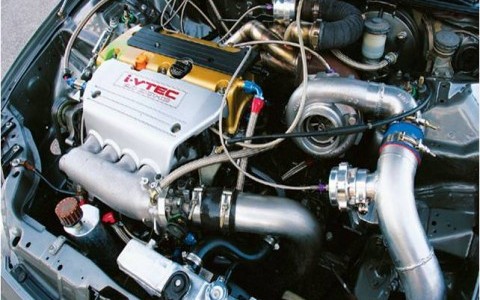
Do you know that 90% of all turbocharger failures are due to some unfavorable operating conditions, and problems that are easily avoidable?  It is necessary that all of the components are properly installed and maintained, because these units have close tolerances and clearances, and usually operate at high speeds.  If you would like to ensure the longest possible service life, always utilize proper operating procedures, and maintain clean air and fresh lubricating oil.

To help you, here are some tips and procedures to prevent the usual causes of turbo failure.  As an additional word of caution, always make sure to use these tips in conjunction with the specific recommendations and operating procedures of your vehicle’s manufacturer.

Proper Installation

There are turbo installations that are metal-to-metal fit and require no mounting gaskets.  For these, you do not need to use any additional gasket material.  Note that at 100,000+ rpm, even a small amount of loose sealant will destroy the compressor wheel.  So if the manifold surfaces are damaged, you must repair or replace it.

Then, clean all the connecting hardware and fittings.  Also, visually inspect the pipes, hoses or ducting, and replace them as needed.  Next, check for adequate oil supply, or if there is enough functioning oil pressure or filter system.  The oil supply lines must also be checked because flexible lines can degrade from the inside-out, which can cause the pieces to be flushed down to the new turbo and eventually clog the oil-feed ports.  Make sure that the hard lines are not bent, because this will cause the material inside the pipe to loosen and be flushed down the pipe upon start-up and clog the ports.

Next, check the filter elements and screens, and see if your system has a filter screen in the oil supply line.  If so, it may not have a bypass feature.  So, if the line is blocked, the turbo will be deprived of the oil it needs and swiftly fail.  If you have this kind of system, you must have it checked periodically.

Maintenance and Service

As far as care and prevention, you must avoid the penetration of foreign bodies into the turbine or the compressor.  Ensure that there is no debris in the air box.  Then, air cleaner elements should be replaced or thoroughly cleaned.  Also, prevent any dirt from contaminating the oil.  Make sure to change oil and oil filters regularly, especially after new turbo installation.

Tips for Operation

Proper use of the vehicle also helps prolong the turbo life of your car.  Thus, avoid operating the vehicle for very long periods that are beyond the design performance parameters.  These prolonged periods can generate excessive heat, and when you overheat the engine too much, that breaks down the oil and produces high exhaust gas temperatures, which will affect the ignition system and injection system.

Another tip is to avoid hot shut down.  This means that if the temperature is high, allow your vehicle to idle and cool down to a lower, normal temperature.  Once the engine, its systems and the oil are cooled down, you will prevent the burning or caking of the oil, and these all result to component failure or reduced performance.

Remember that all these tips are or turbo equipped vehicles and applications.  If you would like to purchase high quality car components online with great discounts, check out autopartsway.com.

Toyota recalls another 2.17 million vehicles in the U.S.

lexus recall

Toyota Motor Corporation has announced another recall on Thursday concerning some 2.17 million Toyota and Lexus vehicles in the United States for inspection and repair of accelerator pedals that may be entrapped in the floor mats or caught in the carpeting.   

The Japanese automaker added that more than half of the recalled vehicles will be added to the massive recall in 2009 that repaired gas pedals that were being trapped in floor mats.

To date, the world’s no. 1 automaker has recalled a total of 19.2 million Toyota and Lexus vehicles around the world, with more than 13.7 million vehicles recalled in the U.S. alone.  These safety problems have been plaguing the auto giant since fall of 2009. 

The National Highway Traffic Safety Administration (NHTSA) stated earlier in the month that their 10-month review of 400,000 pages of Toyota documents, along with the investigation conducted with the support of NASA engineers revealed that electronic flaws were not to blame for the consumer complaints of sudden, unintended acceleration.  Toyota has paid the U.S. government a record $48.8 million in fines for its handling of three huge recalls.  This latest recall has officially closed NHTSA’s investigation of the received complaints.

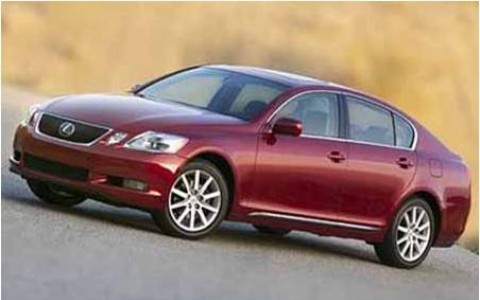
One of the reported problems is that the accelerator pedal can get stuck in the plastic pad part of the driver’s floor mat if the floor carpet around the accelerator pedal is not properly replaced after service.  To fix this problem, Toyota is recalling 20,000 2006 and early 2007 Lexus GS 300 and GS 350 all-wheel-drive sedans.

The other issue is that in other cars, the retention clip used to secure a piece on the vehicle’s center console may come loose if not installed properly, and may then lean toward the accelerator pedal and interfere with the accelerator pedal arm.  This problem prompts the recall of 372,000 model year 2004 through early 2007 Lexus RX 330, RX 350 and RX 400h SUVs, as well as approximately 397,000 2004 through 2006 Highlander and Highlander Hybrid SUVs.  Toyota also announced that RX and Highlander owners will be notified soon about how to proceed with the inspection through the dealers.

In addition, Toyota is also expanding the recall previously announced in November 2009 in which gas pedals could become trapped on extra-thick floor mats that did not originally come with the car. Dealers will reshape the cars’ gas pedals and floorboards to avoid getting stuck even when thick, all-weather floor mats are used.  

The vehicles covered by the giant recall of about 1.5 million vehicles include about 603,000 Toyota 4Runner SUVs sold from the 2003 through 2009 model years; about 17,000 Lexus LX 570 SUVS sold from the 2008 through 2011 models years; and about 761,000 Toyota RAV4 vehicles sold from the 2006 through 2010 models years.

Car brands with the best resale value

AUDI A5

Usually, one of the most ignored factors in purchasing a vehicle is the resale value.  Most car buyers would pay more attention to the price, the style and accessories, or the monthly payments and the interest rates.  However, much can be said about car brands and models that are slow to lose value over the years.  If you are the type who has the tendency to sell or trade your vehicle a few years down the road, you should probably look into this factor more closely.  Here is a short list of the car brands and models with the best resale value as gathered by one of America’s biggest used cars sales company.

Best brand: Subaru. Of all car brands, Subaru is best known to limit its sales rebates and other incentives, so its car owners are able to sell their cars for the biggest percentage of the original price of the vehicle.  Subaru’s all-wheel-drive standard on all its vehicles can sell big in States where there are lots of snow, mud and rain.  More than these, the owners of this Japanese brand are known to keep their vehicles even after reaching 100,000 miles.  So if you would like to sell your Subaru with less mileage, you can still sell it with great value.

Best Luxury Brand: BMW. Some would even argue that in other cases, BMW would be the safest bet for the highest resale value.  This is due to BMW’s well-known German consistency and engineering.  For instance, the BMW Series3 not only has a good resale value, but is also regarded by many as the best overall vehicle in the world.  On the other hand, the BMW X5 is also considered the best luxury SUV.  The X5 has seats enough for seven people, has all-wheel drive like Subaru, and has a well-admired style that has been popular since it was first introduced in the ‘90s.  Overall, along with the high quality of its vehicles, the classic appeal and popularity of this brand means the huge demand can give you more leverage in reselling with a good price.

Best single model: Audi A5. This German brand has also received much acclaim from auto-enthusiasts all over the world, especially for the two-door coupe A5’s excellent interior and handling.  Its limited availability attests to its continuing high demand.  Although Audi has been known for having less quality than other German brands, it has shown improvement in recent years.

Best crossover: Honda CR-V. The interesting thing about the Honda CR-V, is that its high resale value actually has a great influence in the sales of the brand new vehicles.  This top-selling crossover has better resale value than many of its competitors like the Toyota RAV4, Ford Escape, Chevrolet Equinox and others.

Best pick-up truck: Toyota Tacoma. Although the Tacoma is not much advertised by its Japanese automaker, it has a market in small business owners who do not need to have full-sized pickups like the Ford F Series or the Chevy Silverado.  And since Ford and possibly GM, are expected to leave the mid-sized segment when their pick-up models are taken off the line, the Tacoma is expected to bring in more money for Toyota.  In terms of resold pick-up trucks, the Tacoma leads because of its reliability as well as the amazingly low prices.

If you would like to purchse high quality car components with very low prices for any of the best car brands, please check out autopartsway.com.

Troubleshooting Rotor Problems

brake disc rotor

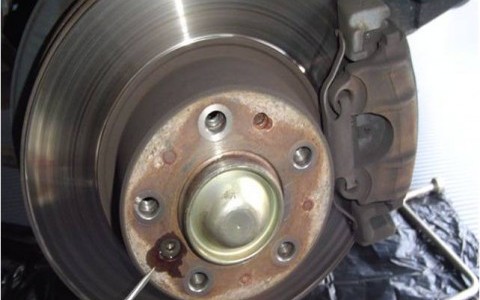
Most people don’t know that when it comes to disc brake rotor problems, often the rotor is not the culprit at all.  It may surprise many that when you troubleshoot the problem, it reveals that the root cause is anything but the rotor.  The good news is, when you closely examine the rotor, it can help you identify what the actual problem is.  Check out these tips to help you spot the true defect, as well as the causes and possible solutions to each one.

Cracked Pot or Hat. If you see that the disc pot near a wheel bolt is cracked, one possible cause is that one or more of the bolts are poorly press-fitted.  To solve this problem, you should simply make sure to press-fit the bolts according to your manufacturer’s recommendation.

Judder and noise. If you hear any abnormal noise, or through visible checks, find some overheating marks on the outside of the friction ring as well as some pad material deposits and cracks, it might be caused by some jammed bushings and guide.  To solve this, you must replace those bushings or perhaps the complete caliper set, if necessary.  Other possible causes include the possibility of the brake not releasing, or the pistons are jammed or rusted solid in caliper, or the pads are jammed in the caliper.  If the guides stiff, it might also be a reason for the problem.  In order to avoid and repair these, you must check calipers for free movement, the residual pressure in the system and inspect the pads and bushings.  Also, you must be careful the next time you are driving not to overstrain the brakes.

Shimmy and Noise. If you notice heat bluing on both sides of the friction ring after every little use of the car, check for possible inadequate bedding-in, overstraining of brakes, residual pressure in the system, pistons jammed in the caliper, and stiff guides.  Another possible clue, which you can inspect visually, is if the layer of rust on the friction ring is lifting.  This might be caused by some water damage or an extended service life that has resulted in a badly rusted disc.  To solve these problems, follow some of the same advice given above, and thoroughly inspect the hydraulic system.  Avoid overstraining of the brakes and follow bedding-in and operating instructions.  You must also check the caliper channel and the pads for free movement and lightly grease the caliper and pad contact surfaces.

So the next time you think you have a problem with your disc brake rotor, think again.  It is closely related to so many other car accessories that may be the actual causes of the problem.  Knowing the roles of these parts will also help you properly maintain your vehicle.

If you would like to purchase high quality parts and accessories online with great discounts, check out autopartsway.com.

Ford recalls 144,000 F-150 Pick-ups for Airbag Risks

ford 150

Ford announced Wednesday that they are recalling 144,000 F-150 pick-ups from the 2005 – 2006 model years in the U.S. and Canada due to concerns about a possible short circuit that may cause airbags to deploy without warning.

This action was a response to the advice of the National Highway Traffic Safety Administration (NHTSA) following their investigation of 238 reports of accidental airbag deployment a few seconds after the F-150s were started.  In a formal announcement made by Ford, the automaker claimed that, “the condition does not present an unreasonable risk to motor vehicle safety.  However, to avoid a protracted discussion with the agency and to provide repair to those vehicles most likely to exhibit the condition, Ford is recalling those vehicles produced at the Norfolk Assembly Plant from November 1, 2004 through June 30 2005.  The NHTSA advised Ford of the recall after receiving 77 reported injuries, including chipped teeth, minor burns and cuts to the arms, hands and face.

Some road vibrations and even regular driving conditions cause the airbag wires to rub against the metal edge of the horn plate.  This rubbing may eventually cut through the insulation on the wire, leading to circuit shortage and the airbag deployment.

For also announced that it would notify the vehicle owners in early March.  The automaker added that the expected time to replace the potentially flawed wiring harness is less than half a day, and this repair would be done for free at Ford dealerships.

In total, Ford is recalling 135,000 F-150 trucks in the U.S. and 9,000 in Canada.  The Ford F-150 is the top selling vehicle in the U.S.

AutoPartsWAY.ca Website Overview Video

web

This video was submitted to us by one of our customers. Thank you! We think it is very useful to new customers and explains the very basics of our website very well. Again, thank you for your hard work on this and for submitting it to us.

Ford and Ferrari battle over the F150 name

2011-ferrari-f150-formula-1-race-car_100338796_m

Ferrari announced yesterday that it will carry on with the name “Ferrari F150th Italia” Formula One car even after Ford Motor Corp. has filed a lawsuit against the legendary Italian automaker specifically over the use of the abbreviation “F150”.

According to the Ford camp, Ferrari’s F150 logo looks too similar to Ford’s F150 pick-up truck.  And even if you’re not a diehard car enthusiast, you should probably know that the Ford F150 is one of the top selling vehicles in the US.  The complaint was filed in the U.S. District Court in Detroit last Wednesday.  As of yet, Ford claims that it had not received the formal notification of Ferrari’s plans.

Ford’s main contention, as stated in the formal complaint, is that “Ferrari has misappropriated the F-150 trademark in naming its new racing vehicle the “F150” in order to capitalize on and profit from the substantial goodwill that Ford has developed in the F-150 trademark”.

Moreover, Ford has asked the court to prohibit Ferrari from using the F150 name.  They are also seeking unspecified damages, in addition to $100,000 for violating the Anticybersquatting Consumer Protection Act.

Ferrari, meanwhile, stated that it is difficult to fully comprehend Ford’s viewpoint.  They claim that their car for this season’s F1 world championship was made so in celebration of 150 years of Italian unity, and more so, it is not commercially available.  They believe that the “Ferrari F150th Italia” cannot be confused with any other type of commercial vehicle in the slightest.  They also believe that it is very difficult to establish a connection between its F1 championship contender and any road-going branded vehicle.  Nonetheless, in order to further demonstrate good faith, Ferrari has decided that all abbreviated versions will be replaced with the full name version “Ferrari F150th Italia”.

If you would like to purchase Ferrari or Ford components online, please check out Autopartsway.com, and take a pick from our huge selection of high quality auto parts with big discounts that can be delivered right to your doorstep.

Switch to our mobile site