Tag Archives: repair

Bleeding your car’s cooling system

One of the more frustrating things about making repairs to your car is when they don’t go quite correctly, and the car fails the first post-repair test drive. Any time you replace parts, you need to put the new parts in so that they fit and function the way your car came from the factory. For some parts, this is as simple as bolting them in and tightening them to the proper torque specification. I other cases, some parts, mainly electrical ones, need to be adapted to the car once installed.

In yet other cases, mechanical parts work in conjunction with fluids. As such, special care needs to be taken. A good example of this is replacing parts in your car’s cooling system. Generally, replacing a water pump or radiator isn’t all that difficult. Accessing your car’s heater core can be a challenge sometimes, but replacement is usually a simple matter of clamping off and removing hoses and the replacing the heater core itself. A water pump will unbolt from the engine block once the drive belt is off. A new pump, a new gasket, and some sealant, and you’re all set. While we’re at it, let’s not forget cooling system hoses. Nothing could be simpler – you loosen the hose clamps, replace the section of hose in question, and you’re done.

So, you have your cooling system repaired and solid. You open your radiator cap and fill the system with fresh coolant. The only thing to do now is to test drive the repair, right? So, you get out on the road, and everything seems okay… until the temperature gauge reaches its normal range, and then keeps going up. You pull the car over just before reaching a severe overheat. Why did this happen?

Chances are, you didn’t bleed the air out of the cooling system properly (or at all). Simply filling the radiator at the end of repairs isn’t enough. An air pocket trapped in the system can cause an overheat. These air pockets need to be eliminated. There are many tricks to accomplish this. But, for the most part, you’re going to want to raise the front of your car on ramps or jack stands, and then once your initial fill of the cooling system is done, start the engine. The water pump will circulate coolant through the system, eventually pushing out the air pockets. You’re going to want to keep plenty of coolant and a funnel on hand. Keep filling the system until the car is up to temperature and the thermostat opens. Stop your car and let it cool. If necessary, top up the coolant again. From there, you should be good to go, and shouldn’t need to worry about further overheating.

A decent car on a budget

C

So, the time has finally come for me to replace my wife’s car. Not to toot my own horn, but I’ve done a pretty decent job keeping it running all these years. After all, the car has 320,000 miles on its original, unopened engine and automatic transmission, so I must be doing something right. But, the car is finally starting to show its age and mileage, so we’ve decided to move her into a newer, lower-mileage used car. Of course, with what the used car market is these days, finding a decent car on a budget has become something of a challenge. Low mileage cars needing no repairs and that are caught up on their maintenance are demanding a premium these days. Cars that are in our usual price range are getting more and more ragged in terms of condition.

So, after a couple of months of shopping around, we finally found a car that was a bit of a compromise all around. It was a bit newer than her old car, but only had 115,000 miles on it. The engine, transmission, and body were all basically solid, though neglected. The seller had obviously sugar-coated the description. The “brand new” tires certainly had most of their life ahead of them, but had seen quite a bit of use. The “brand new” exhaust was in good shape overall, but loud, likely due to a failed gasket, and was probably somewhere between a year and two years old, based on appearance.

The car ran and drove, but there were a number of issues. Although the seller claimed a recent timing belt job, he had no records to back up his claim. Given that the timing covers looked undisturbed, I’m going to err on the side of caution and replace the timing belt and water pump while I’m in there.

As they look original, I’m going to be replacing the accessory drive belts as well as both radiator hoses and the heater hoses. This will, of course, necessitate fresh coolant and a new radiator pressure cap. Also on my list is new spark plugs and wires. The engine has some minor leaks, so I’m going to go ahead and replace the valve cover gasket and intake manifold gasket.

My goal is to get the car to the point where it’s completely caught up on its maintenance, so I’m also going to be replacing the fuel filter and fuel hoses, as well as the transmission fluid and filter and the differential fluid.

Once I’m done with the work, I estimate I’ll still have spent less than the book value of the car, and will have a car that is reliable and dependable to show for it.

Shock and strut replacement

If you’re out on the highway and you’re feeling every crack in the road and every pebble you drive over, chances are that your shocks or struts are worn out and need to be replaced. Shocks and struts perform the same basic function – dampening road vibration. When they wear out, you experience decreased comfort as well as decreased safety on the road. Wear in your car’s suspension can lead to instability on the road and increased stopping distances when braking. Many people don’t think about it, but your shocks and struts are are a vital part of your car’s safety systems.

When it’s time to replace them, the first thing to do is figure out whether you have standard shock absorbers or MacPherson-style struts. A traditional shock absorber typically will bolt directly to the car’s body and then to the suspension control arm. The leaf or coil spring is a separate piece with its own distinct mounting points. A MacPherson strut also tends to be an anchor point between the wheel carrier and the car’s body. Replacing MacPherson struts requires special tools, but can be a suitable DIY job.

Replacing standard shock absorbers is a comparatively easy process. Generally, you raise and support the end of the car you’re working on, unbolt, and then remove the shock absorber. To install the new one, you simply bolt it in, paying attention to the factory-approved torque specifications, of course.

Strut replacement is a little more complex. As struts tend to be further integrated into a car’s suspension and steering, more care needs to be taken. Often, you’ll find that a car’s alignment can be disturbed when a strut is removed and installed. One thing you can do is make alignment marks with paint to ease reinstallation. However, you should probably err on the side of safety and have an alignment done after strut replacement.

As with shocks, you raise and support the appropriate end of the car. Once you’ve made some alignment marks, you generally unbolt the strut from the wheel carrier. From there, you unbolt the strut bearing from the car and remove the strut. From there, you can either install a pre-built strut, or you can rebuild the strut yourself before installing it. To do so, you’ll need spring compressors to release the tension from the coil spring before you disassemble the strut.

Often, the difference between a worn strut and a new one is night and day in terms of road feel. In addition, your car will be safer, and new struts can only help with fuel economy.

Dealing with a “new” car

Recently, I wrote about my wife’s “new” car. After rolling over the sixth digit on the odometer a third time, it just seemed like it was a good idea to put her in a car with less than 320,000 miles on it. As well as I’ve maintained that car, it’s not impervious to the damages of time and long-term wear and tear. The engine is starting to show signs of being tired and the transmission seems to be showing the first vague hints of slipping. So, I went out and bought her the best used car I could get my hands on.

Of course, knowing me, I didn’t go out and buy a car in mint condition. Instead, I decided to save some money by buying a car with solid fundamentals (good engine, transmission, and body), and save some money by fixing minor problems myself. Even at 115,000 miles, the “new” car had more than its fair share of minor problems.

The goal was the get the car running as close to new as possible. As such, I’m starting with engine-related items. Due to lack of records on the car, the first item on my list if a full tune up, and I do mean full. I’ll be putting in a new timing belt and belt idlers. From there, I’ll be replacing spark plugs and wires, as well as the air and fuel filters, both accessory belts and all the hoses. Basically, every wear-and-tear item I can find is getting replaced with a new one. In addition to the parts, I’ll also be replacing all the fluids: engine oil, transmission fluid, coolant, brake fluid, and differential oil.

The work doesn’t stop under the hood. The car test drove OK for the most part, but it was noticeably loud. As the exhaust system looks recent, I don’t suspect it on the whole, but rather suspect a leaky gasket at the catalytic converter. As such, I’ll need to replace that, too.

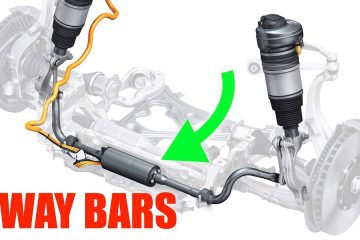
Once the car is caught up on its general maintenance items, I’ll be turning towards overall ride quality. The car drove well on local roads, but reacted harshly to every bump on the highway. As such, I’ll be replacing all four struts and strut mounts, as well as ball joints, sway bar links and sway bar bushings. Also, as I spotted torn steering rack boots, I’ll be replacing those, too.

True, it’s a lot of work, and a lot of parts. But, as the car’s engine, transmission, and body are in overall good shape, it’s worth it if the end product mechanically approximates a new car, and still costs under book value.

Caps and rotors

If you have an older car, chances are that one tune-up item you need to pay particular attention to is your ignition system. One item you don’t see too often anymore is the distributor. Most cars, these days, have long since transitioned to distributorless ignition systems, thus simplifying the tune-up process. But, if you’re maintaining a car with a distributor ignition system, it isn’t too hard to add this to the list of items you need to take care of.

First off, where are the common wear points in a distributor-based ignition systems? Primarily, you’re looking at two different parts – the distributor cap and the rotor. The distributor cap is exactly what it sounds like – a cap that fits over the distributor. It’s easy to identify, if you haven’t seen one before. Follow the spark plug wires to where they meet up, and you’ve found the distributor cap. Once you unclip it and lift off the cap, you’ll find the rotor. The rotor sits atop the distributor shaft, and rotates with the engine. The rotor, combined with the cap, is responsible for getting spark to each spark plug in the correct order. In fact, that’s where the distributor gets its name – it distributes the spark.

It’s impossible to tell from the outside if your cap and rotor are worn, except perhaps by observing suffering engine performance. In order to inspect them, you need to unclip and lift off the cap and inspect the contacts inside it, as well as those on the rotor. Visible scoring is a sign of wear and indicates that it’s time to replace them.

Thankfully, the distributor cap and rotor are two of the easiest maintenance items to replace in your engine. Replacement doesn’t even require tools. However, make sure to note which spark plug wire goes to which contact on the distributor cap. If not, it’s easy to mix them up, and if you do, your engine may not start. If it does, it’ll undoubtedly misfire.

The rotor itself is even easier to deal with. Once the distributor cap is off, the rotor should pull right off the shaft. If it’s stuck, just give it a little more muscle.

While you’re replacing your cap and rotor, it’s a good time to replace your spark plugs. Also, take a look at your ignition wires. If you’ve noticed the car hesitating on a damp morning, only to behave normally after a moment or two, you probably have worn wires. If you’re not sure, start the engine while it’s dark and mist the wires with a spray bottle of water. If you see sparks, you know it’s time to replace the wires, too.

With a little attention, your ignition system should keep going for a long time. It’s easy to inspect, and it’s a good idea to do so if you’re not sure when it was last serviced.

Cylinder head replacement

Recently, my car developed a misfire. I was experiencing a recurring P0302 trouble code, indicating the misfire was in cylinder 2. Knowing there could be multiple causes of the misfire, I approached the problem by investigating the simpler possibilities first. Starting with spark plugs. After combing through the entire ignition and fuel injection systems to no avail, I decided to run a compression test, which definitively told me that the problem was in the cylinder head itself. As the car wasn’t overheating and I was seeing no signs of oil and coolant mixing, I was left with the theory that the problem was most likely a burned exhaust valve or a worn valve guide in that cylinder. At any rate, the cylinder head needed to come off to repair it.

I mulled over the possibility of rebuilding the cylinder head myself, installing new valves, guides and other parts as necessary. But, as I needed to drive the car, I decided that the most efficient way to tackle the job would be to purchase an already-rebuilt cylinder head. I waited until I had the new cylinder head in hand before I started disassembling my car.

Of course, the cylinder head wasn’t the only thing I needed. In addition to that, I needed new intake and exhaust manifold gaskets (as the intake and exhaust had to come off the engine), new exhaust studs, a new valve cover gasket, fresh coolant, and, most of all, a new head gasket. Working with a good shop manual, I tore into the job on a Saturday. In order to get the cylinder head off, I needed to remove the intake manifold, the exhaust manifold, the alternator, power steering pump, the timing belt, and camshaft pulley.

Once everything was out of the way, I removed the cylinder head bolts and lifted the head out with the engine in place. Installation was a bit more complex than you might have expected. The head bolts needed to be replaced, and needed a light coating of oil. The new head gasket was installed dry, as per factory specifications. Once the head was in place, there was a very specific torque sequence to follow in order to properly seat the new head gasket and get it to seal against the block.

After the new head was installed, the rest of it was nothing more than putting the engine back the way I found it. The timing belt had to be reinstalled. As the timing belt was recent, I saw no reason to install a new one. From there, the exhaust had to be bolted up to the engine and the intake manifold needed to be reinstalled, paying particular attention to all the electrical and vacuum connections.

As soon as everything was in place, I was able to start the engine and bleed the air out of the cooling system. The best part about it? The engine now runs properly and without the misfire.

Preparing a car for sale

All good things must come to an end – even car ownership. Only a select few will shell out their hard-earned money for a car and keep it for life. Some will part with their transportation in an unfortunate accident. Most of us, however, end up selling our cars at some point or other. But, what’s the best way to go about doing that?

The fact is, different rules apply in different sales situations. In some states, you can sell a car in any condition you want so long as you mark the bill of sale “as-is.” In other states, the seller is, to a degree, liable and responsible for the condition of the car being sold. I live in one of those states, and I’m getting ready to sell a car.

As you’ve read in recent blog posts, I just bought my wife a lower-mileage car to replace her prehistoric daily driver. As such, I’m preparing her old car for sale. Even though it has high mileage, I think it’s still too good to have it hauled off to the junkyard. But, it’s certainly old enough and high enough in miles that a car dealer wouldn’t want it. As such, I’ll be selling it privately.

Due to the law in my state, I’ll be selling the car with full disclosure as to all known problems. For example, I’ll be letting potential buyers know about the broken air conditioner. But, I know that I have to fix at least some of the car’s problems in order to be able to sell it for more than scrap value.

First and foremost, I’ll be giving the car a full tune-up (which is currently overdue). The spark plug wires are still serviceable, but the car will be getting new plugs, a new fuel filter, air filter, an oil change with fresh filter, as well as coolant and transmission fluid changes. The goal is to, as inexpensively as possible, get the car to a condition where the next owner can drive it right away without having to put a lot of money into it, even if items such as air conditioning don’t work.

Aside from the engine, I’ll also be making sure that all the safety equipment works properly. This means double-checking the brakes and making sure every light on the car as well as the horn is in working condition. Once these issues are taken care of, I’ll list the car for sale, with a price reflecting the recent work done as well as the car’s overall condition and the high mileage. From there, we’ll see what happens.

Getting creative with NLA items

Three letters you don’t want to see when shopping for parts for your older are NLA. In case you didn’t know, NLA stands for “no longer available.” Often, when a car is older and long out of production, the vehicle manufacturer no longer makes or stocks certain parts for it, and sometimes the aftermarket hasn’t stepped in to take up the slack. This leaves owners of those cars in something of a bind.

One option that some people resort to is looking for used parts. The problem with this approach is that used parts are used, and are partway through their useful lifespan. This becomes a particular problem when the part in question is a wear-and-tear item such as a molded cooling system hose. Thankfully, with a little ingenuity, you can come up with a functional replacement.

The most important thing to note when looking at a cooling hose is its diameter. Most cooling hoses, you’ll find, are the same diameter on both ends. For a hose with only two ends, this simplifies the problem. Replacing a curved, molded cooling hose with a piece of straight hose may seem like a no-brainer, but can introduce unforseen difficulties. Often, a straight hose used in place of a curved hose will need to bend, and if the bend is too severe, the hose can kink, cutting off flow in the cooling system, leading to an overheat or worse.

One way to avoid this is to route such a long piece of hose that the curve becomes more gradual and the hose doesn’t have any sharp bends. In many cases, this is an acceptable solution. Sometimes, it isn’t. A way to avoid this is to use a flex hose. A flex hose has an embedded spring that allows the hose to be curved without sharp bends. Still, these often don’t work in tight spaces or with smaller hose diameters.

In these kind of cases, another option it to match up the diameter of the old hose to a section of straight hose, and then with use of various angled hose connectors, replicating as closely as possible the original shape of the hose. Hose connectors can also be useful when replicating a molded hose that has more than two ends or one that has ends of more than one diameter.

One last pitfall to watch out for when substituting non-original cooling hoses is the potential introduction of air pockets. Typically, this isn’t a long-term problem, but non-original hoses, as described, can inadvertently complicate the process of bleeding air out of the cooling system when filling with fesh coolant.

At the end of the day, NLA parts are not an insurmountable problem in keeping your car on the road. They do, however, require some ingenuity.

Exhaust repair challenges

In the past, I’ve discussed exhaust system layout and the functions of the individual parts. Sometimes, these parts need to be replaced. This is doubly true if you live in the rust belt and drive on salty winter roads, or otherwise subject your car’s exhaust system to abnormal wear and tear. Unfortunately, these conditions, combined with the heat and cold cycles that exhaust systems go through every time they’re used, often make the job more difficult than it would be otherwise. But, if you keep a few simple tricks in mind, replacing exhaust parts can be much less difficult.

First off, you’ll need to determine where the damage is. If you have a rust hole or damage in one part of your exhaust system, other parts might still be serviceable. If you can’t see the damage from a distance, get the car up on a lift, ramps, or jack stands and inspect it more closely. Once you’ve found the wear or damage, your next task is to determine how the exhaust system is assembled. In most cases, you’ll find that the exhaust is bolted together and secured to the car with rubber hangers. Sometimes, the exhaust is welded together, either by the factory or by the last exhaust shop to have worked on the car.

If the exhaust is bolted together, you can save yourself some trouble later on by soaking the exhaust bolts with penetrating oil a couple of days in advance. You’ll find that exhaust nuts and bolts tend to rust together pretty badly, and this will help you separate them when you have your new parts ready for installation.

If you have a welded exhaust, you’ll first need to determine which individual pieces are available for your exhaust system. You’ll need to decide if you’re replacing sections or the whole system. Once you know that, and have the new parts in hand, you’re going to need to cut out the old parts. There are a variety of tools you can use, from hacksaws, to rotary cutting tools, to purpose-built exhaust pipe cutters. Just be sure that you work safely, as you’ll be in a confined space underneath the car.

Once you have the old parts out of the way, it’s time to install the new parts. If you’re working near the engine, you’ll sometimes find that your exhaust manifold studs are too beat-up to be reused. If that’s the case, take the time to replace them, so as to avoid a leaking exhaust manifold gasket upon reinstallation. Also, if the penetrating oil didn’t do enough to help loosen the fasteners, you can speed things along with careful application of heat via a torch, or by using a nut splitter to cut the old fasteners out.

As with any repair job, a little planning ahead can mean time and effort saved when working on an older exhaust system.

Brake pad and rotor replacement

You’re driving along, hit the brakes, and all of sudden you hear a scraping sound you haven’t heard before. Or, maybe that brake pad wear indicator light in your instrument cluster comes on for the first time. Either way, this means one thing – it’s time to replace your brake pads (and most likely rotors, too). Failing to do so can lead to further damage down the road. At this point, your car will still stop, but you’re not far off from wearing completely through the friction material on the brake pads. Once you’re through it, you’ll be running the brake pad backing plates directly on the rotors, which will wear through the rotors. So, it’s best not to hold off on this repair.

There are more choices than ever in the aftermarket for brake pads and rotors. Do your research. There’s everything available from cheap parts all the way up to race-grade items. Thankfully, competition and choice have made it so that even decent quality items are available at decent prices.

The first thing to do, as would be expected, is to determine whether you need to replace pads and rotors at the front, rear, or both. An experienced ear can tell on the road which will need to be replaced. If you can’t tell from the sound, you’ll need to investigate visually. Usually, this means raising the appropriate end of the car and removing the wheel. You can usually get a good enough look in the caliper to see how worn the brake pads are. You can certainly get a good look at the condition of the rotors this way, too.

Once you’ve determined whether your problem is in the front, rear, or both, and have ordered parts, it’s time to do the work. Once again, you’re going to want to raise the appropriate end of the car, support it on jack stands, and chock the wheels on the opposite end of the car. From there, you dismount the wheel and set it aside. Once that’s done, you remove the old brake pads. Usually, this involves unbolting the caliper lock pin, pivoting up the caliper body, and pulling the brake pads out. If you’re replacing the rotors, too (which is always a good idea – most modern rotors aren’t manufactured with enough thickness to allow for resurfacing), you then unbolt the caliper body and bracket and hang them out of the way with a stiff piece of wire (never hang it from the brake hose). There may be a small, countersunk set screw, but otherwise, the rotor will just pull off the hub. From there, reassembly is the reverse of the process.

One very important thing to keep in mind is that brakes are done front and/or rear, and NEVER left or right. Brakes must be done on the left and right at whichever axle you’re working on.

Switch to our mobile site