Tag Archives: maintenance

A decent car on a budget

C

So, the time has finally come for me to replace my wife’s car. Not to toot my own horn, but I’ve done a pretty decent job keeping it running all these years. After all, the car has 320,000 miles on its original, unopened engine and automatic transmission, so I must be doing something right. But, the car is finally starting to show its age and mileage, so we’ve decided to move her into a newer, lower-mileage used car. Of course, with what the used car market is these days, finding a decent car on a budget has become something of a challenge. Low mileage cars needing no repairs and that are caught up on their maintenance are demanding a premium these days. Cars that are in our usual price range are getting more and more ragged in terms of condition.

So, after a couple of months of shopping around, we finally found a car that was a bit of a compromise all around. It was a bit newer than her old car, but only had 115,000 miles on it. The engine, transmission, and body were all basically solid, though neglected. The seller had obviously sugar-coated the description. The “brand new” tires certainly had most of their life ahead of them, but had seen quite a bit of use. The “brand new” exhaust was in good shape overall, but loud, likely due to a failed gasket, and was probably somewhere between a year and two years old, based on appearance.

The car ran and drove, but there were a number of issues. Although the seller claimed a recent timing belt job, he had no records to back up his claim. Given that the timing covers looked undisturbed, I’m going to err on the side of caution and replace the timing belt and water pump while I’m in there.

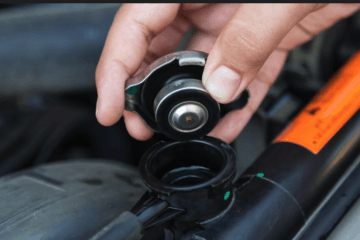
As they look original, I’m going to be replacing the accessory drive belts as well as both radiator hoses and the heater hoses. This will, of course, necessitate fresh coolant and a new radiator pressure cap. Also on my list is new spark plugs and wires. The engine has some minor leaks, so I’m going to go ahead and replace the valve cover gasket and intake manifold gasket.

My goal is to get the car to the point where it’s completely caught up on its maintenance, so I’m also going to be replacing the fuel filter and fuel hoses, as well as the transmission fluid and filter and the differential fluid.

Once I’m done with the work, I estimate I’ll still have spent less than the book value of the car, and will have a car that is reliable and dependable to show for it.

Dealing with a “new” car

Recently, I wrote about my wife’s “new” car. After rolling over the sixth digit on the odometer a third time, it just seemed like it was a good idea to put her in a car with less than 320,000 miles on it. As well as I’ve maintained that car, it’s not impervious to the damages of time and long-term wear and tear. The engine is starting to show signs of being tired and the transmission seems to be showing the first vague hints of slipping. So, I went out and bought her the best used car I could get my hands on.

Of course, knowing me, I didn’t go out and buy a car in mint condition. Instead, I decided to save some money by buying a car with solid fundamentals (good engine, transmission, and body), and save some money by fixing minor problems myself. Even at 115,000 miles, the “new” car had more than its fair share of minor problems.

The goal was the get the car running as close to new as possible. As such, I’m starting with engine-related items. Due to lack of records on the car, the first item on my list if a full tune up, and I do mean full. I’ll be putting in a new timing belt and belt idlers. From there, I’ll be replacing spark plugs and wires, as well as the air and fuel filters, both accessory belts and all the hoses. Basically, every wear-and-tear item I can find is getting replaced with a new one. In addition to the parts, I’ll also be replacing all the fluids: engine oil, transmission fluid, coolant, brake fluid, and differential oil.

The work doesn’t stop under the hood. The car test drove OK for the most part, but it was noticeably loud. As the exhaust system looks recent, I don’t suspect it on the whole, but rather suspect a leaky gasket at the catalytic converter. As such, I’ll need to replace that, too.

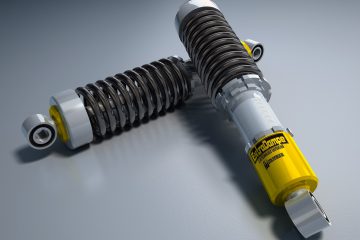
Once the car is caught up on its general maintenance items, I’ll be turning towards overall ride quality. The car drove well on local roads, but reacted harshly to every bump on the highway. As such, I’ll be replacing all four struts and strut mounts, as well as ball joints, sway bar links and sway bar bushings. Also, as I spotted torn steering rack boots, I’ll be replacing those, too.

True, it’s a lot of work, and a lot of parts. But, as the car’s engine, transmission, and body are in overall good shape, it’s worth it if the end product mechanically approximates a new car, and still costs under book value.

Preparing a car for sale

All good things must come to an end – even car ownership. Only a select few will shell out their hard-earned money for a car and keep it for life. Some will part with their transportation in an unfortunate accident. Most of us, however, end up selling our cars at some point or other. But, what’s the best way to go about doing that?

The fact is, different rules apply in different sales situations. In some states, you can sell a car in any condition you want so long as you mark the bill of sale “as-is.” In other states, the seller is, to a degree, liable and responsible for the condition of the car being sold. I live in one of those states, and I’m getting ready to sell a car.

As you’ve read in recent blog posts, I just bought my wife a lower-mileage car to replace her prehistoric daily driver. As such, I’m preparing her old car for sale. Even though it has high mileage, I think it’s still too good to have it hauled off to the junkyard. But, it’s certainly old enough and high enough in miles that a car dealer wouldn’t want it. As such, I’ll be selling it privately.

Due to the law in my state, I’ll be selling the car with full disclosure as to all known problems. For example, I’ll be letting potential buyers know about the broken air conditioner. But, I know that I have to fix at least some of the car’s problems in order to be able to sell it for more than scrap value.

First and foremost, I’ll be giving the car a full tune-up (which is currently overdue). The spark plug wires are still serviceable, but the car will be getting new plugs, a new fuel filter, air filter, an oil change with fresh filter, as well as coolant and transmission fluid changes. The goal is to, as inexpensively as possible, get the car to a condition where the next owner can drive it right away without having to put a lot of money into it, even if items such as air conditioning don’t work.

Aside from the engine, I’ll also be making sure that all the safety equipment works properly. This means double-checking the brakes and making sure every light on the car as well as the horn is in working condition. Once these issues are taken care of, I’ll list the car for sale, with a price reflecting the recent work done as well as the car’s overall condition and the high mileage. From there, we’ll see what happens.

Road trip preparation

Road trip season is here, and if you’re anything like me, you’ll want to get to your destination without breaking down. After all, few people want to spend their vacation in a roadside ditch or at the mercy of a unknown out-of-town repair shop. Someone recently asked me what they should do to prepare their 20 year old car for a long summer road trip. As always, an ounce of prevention will save you a pound of aggravation further up the road.

Just because a car is old doesn’t mean that it has to be unreliable. People seem to be more willing to skimp on preventive maintenance when they’re sticking closer to home, but are understandably less willing to do so when traveling longer distances. In order to make those long distance trips uninterrupted, you’re going to want to look at some common roadside failure items.

First off, check your tires. If they’re worn, evenly or not, it’s a good time to get them replaced and to think about having an alignment done. If your tires are in good condition, make sure to checadjust pressure as necessary. Next, take a look at your cooling system. Look for telltale signs of weakness. If you see any coolant leaking or dripping, it’s time to repair or replace that hose, flange, or other component. Look for signs of crusty, dried coolant around hose connections. These often indicate an old hose that probably should be replaced just for safety due to age.

Once you’ve checked on tires and coolant, inspect all your belts. While you’ll get to your destination (perhaps a bit sweaty) with a broken A/C compressor belt, your alternator belt will leave you stranded in short order if it breaks and you run down your battery. If your water belt is driven by an accessory belt, you’ll have even less time to act if that belt breaks on the road. Last, but definitely not least, check your maintenance records and find out whether or not your timing belt is due for replacement. Depending on your engine, a broken timing belt can lead to a very expensive engine rebuild or replacement.

Along those lines, it’s also a good time to check the level and condition of your transmission fluid, and to service the transmission if necessary. All of this should keep you rolling, but don’t forget to check your brakes, too. You’ll want to be able to stop once in a while, too.

As for your air conditioning, give it a test run before the trip. If it needs to be serviced, the best time to do it is before you hit the road. Bottom line, though, there’s no reason to worry about the reliability of an older car so long as you stay on top of basic maintenance.

Making time to check your oil

As much as people talk about it, you’d be amazed how often people overlook checking their oil. A simple check is one of the best and most important things you can do for your car. Granted, there are some newer cars that don’t have an engine oil dipstick and instead monitor oil level and condition electronically. However, for most of us, the process is the same as it’s been for much of the past century – pop the hood, pull and wipe the dipstick, then reinsert it and pull it back out to check the oil level.

The ideal time to do this is when you’re stopped at the gas station to fill up. If you get in the habit of checking your oil every time you get gas, you’ll be far more in tune to spot a problem when it happens. One thing to keep in mind, though is to check the oil AFTER you fill up with gas. This will give the hot engine oil a few minutes to all drip back to the oil pan, ensuring a more accurate reading when you check the level.

Why, you may ask, would you check the oil at all? The truth is that most cars do lose oil between oil changes. Either engine seals are worn and the engine will gradually leak and drip oil, or some of it will get burned up when the engine is running. If you don’t monitor the level, the engine could eventually run dry, resulting in catastrophic damage.

When you check it, the oil level should be somewhere between the minimum and maximum markings on the dipstick. If you find that the oil level is low, this is the time to correct that. I find it useful to keep a quart or two of fresh oil stashed in the trunk for just such occasions. If you don’t have any with you, chances are that the gas station sells oil. Just make sure before you add anything that you check your owner’s manual to make sure it matches the specifications recommended by your car’s manufacturer.

Another thing to keep in mind is that you should keep a record of the date and mileage of your oil changes. I keep a small spiral notebook in my glove compartment to log maintenance items, but you may have another way you prefer to keep records. It’s important to keep track of this, especially if you drive a lot. You won’t be able to tell too much about the oil’s condition by looking at what comes off the dipstick. Most importantly, bear in mind that the extra effort of monitoring engine oil will pay off in the long run, as you’re likely to get many more years and miles out of your car as a result.

Suspension failure

Like most parts of your car, you wouldn’t necessarily notice it when your suspension is working properly. You’d be more likely to take notice when it’s broken. After all, its primary function is to smooth out the ride. So, what would you look for in order to spot a problem?

In the worst cases, you can actually see the problem. This past week I was driving home from the office, when I noticed a pickup truck with an obvious problem. This was an early 1990s Ford Ranger pickup. I was following behind it when I noticed that the rear driver’s side of the bed was sitting inches lower than the passenger side. I took a quick look, and the tires were inflated. In this case, the truck was sitting on broken suspension. In this case, one can guess the damage by looking at the symptoms. It’s unlikely that a broken shock absorber caused this, as the spring should have held up the body. It’s much more likely that the leaf spring itself broke due to age and rust. This, thankfully, can be fixed by bolting on a new spring. A worse possibility is that the spring mounts broke off the frame. In that case, it would be time for some heavy welding to repair the frame.

What about more subtle damage and wear? You can’t see a lot of it with the naked eye. Some of it you’ll feel on the road. If you’re out on the highway and the ride seems more bouncy and rough than it should be, then it’s likely time to replace your shock absorbers, or struts as the case may be. Depending on the design of your car’s suspension, you will likely need to take the car in for an alignment after this.

What about clunks and similar noises? Those are often caused by other worn parts. The most likely culprit is strut bearings. You can check them with the strut removed from the car. There should be no play at all and the bearing should move freely. It’s also a good idea to replace them preemptively if you’re also rebuilding your strut assemblies. Another item that can cause a similar problem is sway bar bushings and links. With the car off the ground and supported securely, you can check these parts by tugging at them. Once again, any play in the assembly indicates that parts are worn out. This is also a good way to check your wheel bearings, tie rods and ball joints. Remember, there shouldn’t be any free movement in suspension or steering parts when you wiggle them by hand.

By giving these items a quick inspection every time you have the wheels off the ground, you can fix problems as they occur, and avoid a costlier bill down the road.

Wiper blade care

When it starts raining, you want to flip on your windshield wipers and have them work properly. In order for this to happen, you’ll need to give your wiper system some attention once in a while. If you haven’t lately, now’s a good time to do so. Chances are that your wiper blades are carrying a coating of grime from this past winter, or worse.

Caring for your wiper blades is easy, and necessary. If you notice your wipers constantly streaking your windshield or skipping across the surface rather than wiping smoothly, your wipers need attention now. If the blades aren’t visibly torn, you might want to try and clean the blades first. A clean rag and some water will help, but if you need something with a little more power, try cleaning the wiper blades with glass cleaner or isopropyl alcohol. But, don’t stop at the blades. Once the blades themselves are clean, take the time to clean your whole windshield, too. If you’re wiper blades are oily and dirty, chaces are your windshield is too.

Once everything is clean, give your windshield wipers a test to see if there’s any improvement. You can use your car’s windshield washer, or you can spray the glass with a water hose (you may want to avoid doing so if the car has been sitting in the sun on a hot day, as this can cause the glass to crack). If everything seems to work, you’re done. If not, you’ll probably want to go ahead and replace the wiper blades.

Replacement procedures vary by car, but in most cases, you’ll lift the wiper arm up off the glass, pivot the blade, and remove it from the arm. To install the new ones, reverse the process. There is a wide array of aftermarket options for wiper blades, but the most important thing to keep in mind is blade length. Not all blades are standard, and there is a variety of sizes. In some cases, you can purchase blade refills that allow you to save some money by reusing the rest of the blade and just replacing the rubber strip element.

Whichever solution ends up working for you, you’ll want to check, clean, and potentially replace your wiper blades sooner rather than later. You don’t want to be on the road in a rain storm and turn on your wipers only to find them streaking your windshield, making visibility even worse.

Engine swap basics

As many automotive DIY-ers eventually do, I’m currently knee-deep in my first engine swap. In my case, I’m not going for an exotic swap to win points at a car show. I’m also not building an sleeper that’ll win at the drag strip. I’m just doing a one-for-one swap to replace the tired engine in one of my cars with an (almost) identical unit.

A brand new engine simply isn’t available for the car, and a quality rebuild is way out of my budget. I ended up locating a used engine with healthy compression in my budget, so I decided to go that route. In reference to an earlier comment, I say almost identical because although the engines are from the same make and model, the old engine in my car is mated to a manual transmission whereas the one from the donor car was mated to an automatic. This necessitates the first and most necessary part swap – I’ll need the flywheel off my engine. If the clutch still looks like it has a good amount of life in it, I’ll keep it. If not, I’ll install a new one.

Aside from that, I had taken very good care of my old engine, and as such, there are a lot of low-mileage parts that I’m swapping to the donor motor in order to save money. Naturally, I’m replacing items such as cooling system and intake gaskets with brand new items. I will be re-using as many verifiable low-mileage parts as I can in order to keep costs down.

I will be replacing standard tune-up items with new parts. The engine will be getting new spark plugs, oil and air filters, new engine mounts, and a new cap and rotor. Items like molded cooling hoses will be transferred from the old engine, as I replaced them shortly before the bottom end finally wore out and wouldn’t hold oil pressure anymore.

The general rule I’m following is that if there’s a serviceable part on either engine, the better of the two goes to the new engine. Anything that’s even remotely questionable, such as oil pressure and coolant temperature senders, will be replaced with new parts. The goal is to put together the best engine I can on a budget with the best parts available.

When all is said and done, I expect to be able to get in the car, turn the key, and take it back out on the road. Taking the new and used parts into account, I should, in theory, be able to drive it for some time (keeping up on preventive maintenance, of course), before any repairs need to be done.

Guide for acceptable gas consumption in diesel engines

diesel refill

In this era of fuel-efficient and hybrid vehicles, one thing is certain; all drivers, if given a choice, would love to save every penny they can on gas consumption.  It’s always helpful to be aware of gas-mileage stretching tips, but are you aware if your diesel engine is running at acceptable levels?

Honestly, there is no simple answer to that question.  But, there are several identifiable factors that contribute to oil consumption, and if you are able to know these and diagnose if there is a problem or what is causing it, it can save you a lot of money and avoid losing time.   

If you would like a better idea, check the table provided in this article (just below this paragraph).  It’s a simple guideline comparing the engine usage and acceptable oil consumptions.  Be mindful though, that some amounts that are a little less than or beyond those indicated in this table can still be considered within normal standard consumption levels.

Naturally, all engines consume some amount of oil, and as the engine gets older, it would need to run with extra force, and this will lead to increased consumption.  But if you have low mileage or low hours, and still you find your oil consumption getting higher, it would be time for a check, or it could be an indication of an imminent engine failure or a shorter engine life.

Such indications that are easier to identify include external oil leaks, nevertheless, these should not be underestimated.  A few small external leaks may eventually result in a bigger amount of leaked oil over time, which ultimately may lead to your safety concerns.

For its part, internal oil leaks are harder to identify and relatively more expensive to repair.  These can be caused by a number of things, including improper break-in procedures, improperly installed rings, leaking turbo seals, worn valve train components and several others.  They may be as simple as having the wrong type of oil, overfilling the crank case or a failing air compressor, but all of these simple problems can similarly cause increased oil consumption.

Of course, the conditions in which you operate play a big role in your oil consumption.  So you, as the driver, should consider the following:

  • Load factors
  • Oil density and additives
  • Operating practices and temperatures
  • Maintenance programs and practices
  • Equipment applications

Whatever you do, just take the time to investigate and know the problem well to save you time and money.  In some particular environments, there are higher demands that would contribute to increased oil consumption and perhaps even additional repairs to the engine.

For engine parts or oil-related components, and all other auto parts needs with great discounts, check out Autopartsway.com.

Tire Wear Troubleshooting Tips

car tire wear

Dealing with tire wear problems can bring you much frustration, and cost you a lot of money.  There are various reasons and conditions that result in a gap between your expectations and your tire’s actual performance.  While the basic mechanisms of tire wear have not been drastically altered since a long time, simple awareness of the possible factors and their effects on tires is very valuable.  So read on if you would like to know some ways of reducing tire wear on your vehicle.

Classic wear-and-tear would top the list of your tire problems.  Heavy acceleration and braking can result strong forces that can cause scuffing.  Although your car may be designed with these situations in mind, you can try to avoid instantaneous and frequent start-and-stops to improve your tire performance.  You should especially avoid these actions if your car is heavily loaded.

Another cause is making lots of sharp turns.  If your vehicle is equipped with power steering, it would give you less chances of tire wear.  Even then, it’s advisable to use all reasonable available space as much as you can, as those sharp turns can add to tire wear as well.

You might be surprised, but some maintenance practices may also have some negative effects on tires.  For instance, the amount of pressure of inflation is significant for casing durability.  If you overinflate the tire, it can be more prone to wear-and tear; while similarly, if you under-inflate it will also be harmful to your tires.  A good tip is if you add just a little extra inflation to what you are used to, but still within the tire manufacturer’s instructions, it might reduce side scuffing.  Tire alignment is another important aspect.  Make sure your toe setting is always at optimum levels to improve tire performance.

Some new technologies, like regenerative braking, are now available in the market, and some may present some new tire issues that have not been encountered in the past.  Still, whether you are driving an automatic, or a hybrid, or even mid-sized trucks, these basic tire wear mechanisms should help you lessen tire wear issues and get the longest life out of your tires, and ultimately, your vehicle.
For al of your tire parts needs and other high quality components with great discounts, please check out Autopartsway.com.

Switch to our mobile site