

Tag Archives: filter

A decent car on a budget

C

So, the time has finally come for me to replace my wife’s car. Not to toot my own horn, but I’ve done a pretty decent job keeping it running all these years. After all, the car has 320,000 miles on its original, unopened engine and automatic transmission, so I must be doing something right. But, the car is finally starting to show its age and mileage, so we’ve decided to move her into a newer, lower-mileage used car. Of course, with what the used car market is these days, finding a decent car on a budget has become something of a challenge. Low mileage cars needing no repairs and that are caught up on their maintenance are demanding a premium these days. Cars that are in our usual price range are getting more and more ragged in terms of condition.

So, after a couple of months of shopping around, we finally found a car that was a bit of a compromise all around. It was a bit newer than her old car, but only had 115,000 miles on it. The engine, transmission, and body were all basically solid, though neglected. The seller had obviously sugar-coated the description. The “brand new” tires certainly had most of their life ahead of them, but had seen quite a bit of use. The “brand new” exhaust was in good shape overall, but loud, likely due to a failed gasket, and was probably somewhere between a year and two years old, based on appearance.

The car ran and drove, but there were a number of issues. Although the seller claimed a recent timing belt job, he had no records to back up his claim. Given that the timing covers looked undisturbed, I’m going to err on the side of caution and replace the timing belt and water pump while I’m in there.

As they look original, I’m going to be replacing the accessory drive belts as well as both radiator hoses and the heater hoses. This will, of course, necessitate fresh coolant and a new radiator pressure cap. Also on my list is new spark plugs and wires. The engine has some minor leaks, so I’m going to go ahead and replace the valve cover gasket and intake manifold gasket.

My goal is to get the car to the point where it’s completely caught up on its maintenance, so I’m also going to be replacing the fuel filter and fuel hoses, as well as the transmission fluid and filter and the differential fluid.

Once I’m done with the work, I estimate I’ll still have spent less than the book value of the car, and will have a car that is reliable and dependable to show for it.

Engine swap basics

As many automotive DIY-ers eventually do, I’m currently knee-deep in my first engine swap. In my case, I’m not going for an exotic swap to win points at a car show. I’m also not building an sleeper that’ll win at the drag strip. I’m just doing a one-for-one swap to replace the tired engine in one of my cars with an (almost) identical unit.
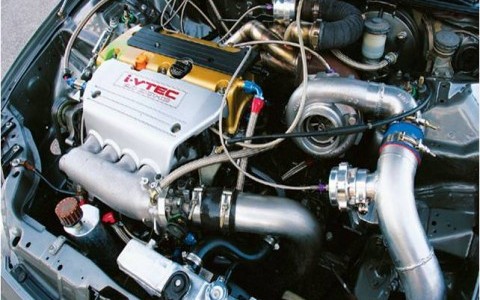
A brand new engine simply isn’t available for the car, and a quality rebuild is way out of my budget. I ended up locating a used engine with healthy compression in my budget, so I decided to go that route. In reference to an earlier comment, I say almost identical because although the engines are from the same make and model, the old engine in my car is mated to a manual transmission whereas the one from the donor car was mated to an automatic. This necessitates the first and most necessary part swap – I’ll need the flywheel off my engine. If the clutch still looks like it has a good amount of life in it, I’ll keep it. If not, I’ll install a new one.

Aside from that, I had taken very good care of my old engine, and as such, there are a lot of low-mileage parts that I’m swapping to the donor motor in order to save money. Naturally, I’m replacing items such as cooling system and intake gaskets with brand new items. I will be re-using as many verifiable low-mileage parts as I can in order to keep costs down.

I will be replacing standard tune-up items with new parts. The engine will be getting new spark plugs, oil and air filters, new engine mounts, and a new cap and rotor. Items like molded cooling hoses will be transferred from the old engine, as I replaced them shortly before the bottom end finally wore out and wouldn’t hold oil pressure anymore.

The general rule I’m following is that if there’s a serviceable part on either engine, the better of the two goes to the new engine. Anything that’s even remotely questionable, such as oil pressure and coolant temperature senders, will be replaced with new parts. The goal is to put together the best engine I can on a budget with the best parts available.

When all is said and done, I expect to be able to get in the car, turn the key, and take it back out on the road. Taking the new and used parts into account, I should, in theory, be able to drive it for some time (keeping up on preventive maintenance, of course), before any repairs need to be done.

Tips for Turbocharger Installation and Maintenance

turbocharger

Do you know that 90% of all turbocharger failures are due to some unfavorable operating conditions, and problems that are easily avoidable?  It is necessary that all of the components are properly installed and maintained, because these units have close tolerances and clearances, and usually operate at high speeds.  If you would like to ensure the longest possible service life, always utilize proper operating procedures, and maintain clean air and fresh lubricating oil.
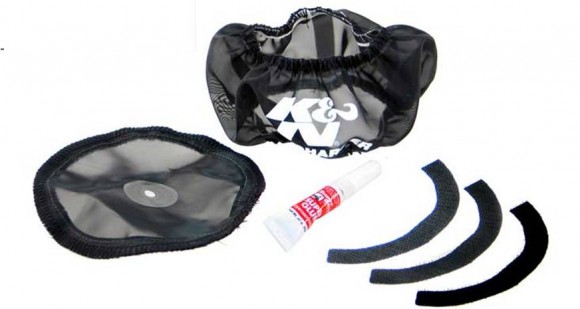
To help you, here are some tips and procedures to prevent the usual causes of turbo failure.  As an additional word of caution, always make sure to use these tips in conjunction with the specific recommendations and operating procedures of your vehicle’s manufacturer.

Proper Installation

There are turbo installations that are metal-to-metal fit and require no mounting gaskets.  For these, you do not need to use any additional gasket material.  Note that at 100,000+ rpm, even a small amount of loose sealant will destroy the compressor wheel.  So if the manifold surfaces are damaged, you must repair or replace it.

Then, clean all the connecting hardware and fittings.  Also, visually inspect the pipes, hoses or ducting, and replace them as needed.  Next, check for adequate oil supply, or if there is enough functioning oil pressure or filter system.  The oil supply lines must also be checked because flexible lines can degrade from the inside-out, which can cause the pieces to be flushed down to the new turbo and eventually clog the oil-feed ports.  Make sure that the hard lines are not bent, because this will cause the material inside the pipe to loosen and be flushed down the pipe upon start-up and clog the ports.

Next, check the filter elements and screens, and see if your system has a filter screen in the oil supply line.  If so, it may not have a bypass feature.  So, if the line is blocked, the turbo will be deprived of the oil it needs and swiftly fail.  If you have this kind of system, you must have it checked periodically.

Maintenance and Service

As far as care and prevention, you must avoid the penetration of foreign bodies into the turbine or the compressor.  Ensure that there is no debris in the air box.  Then, air cleaner elements should be replaced or thoroughly cleaned.  Also, prevent any dirt from contaminating the oil.  Make sure to change oil and oil filters regularly, especially after new turbo installation.

Tips for Operation

Proper use of the vehicle also helps prolong the turbo life of your car.  Thus, avoid operating the vehicle for very long periods that are beyond the design performance parameters.  These prolonged periods can generate excessive heat, and when you overheat the engine too much, that breaks down the oil and produces high exhaust gas temperatures, which will affect the ignition system and injection system.

Another tip is to avoid hot shut down.  This means that if the temperature is high, allow your vehicle to idle and cool down to a lower, normal temperature.  Once the engine, its systems and the oil are cooled down, you will prevent the burning or caking of the oil, and these all result to component failure or reduced performance.

Remember that all these tips are or turbo equipped vehicles and applications.  If you would like to purchase high quality car components online with great discounts, check out autopartsway.com.

Taking Care of Your Car Filters

air filter

All good drivers should know the importance of the filter parts in cars.  Keeping them clean and in good condition is essential for the car to function properly.  It is just like wearing masks when you don’t want to be contaminated by harmful dust or other substances.  In other words, taking care of your car’s filter parts will keep your car healthy.

All car filters contain filtering elements that are made from different materials.  These are as various as cloth fibers, paper fibers, wire mesh screens, or even a combination of the three.  Most oil and fuel filters lodged within a metal container connected to the engine or fuel system.  These filters require regular maintenance, and some replacements.  Remember that a properly maintained filter system can enhance your car’s performance and add more years to your vehicle.

The basic filter parts are air filter, oil filter, fuel filter and cabin air filter.  As their name suggests, these parts filter and purify any gas or liquid that goes into the car engine.  If kept in good condition, they will protect the engine and improve its efficiency.  But although they are all filters, they have their own distinct qualities and it is good to be familiar with each one.

Air Filter

It is very simple to inspect the air filter, and usually it only requires about five minutes!  First, you must open the hood and find the air filter box, which is normally above the car battery.  If you remove the clips that hold the lid of the box, it will make for easier access to the air filter.  Then, you can check the filter to know if it needs to be replaced.  If you see some slight discoloration, this is still acceptable, but if the air filter is dusty and dark in color, it should be replaced to recondition the proper airflow in the car engine.

Air filters block the small debris and other particles and allow the filtered air to go into the engine.  If some dirt somehow enters the engine, it would cause premature failure. 

Oil Filter

Standard service and maintenance are essential for longer engine life.  Modern engines have more power which requires you to change oil at regular intervals.  Normally, these intervals are every 3,000 miles, or 3 months (whichever comes first).  If your car uses synthetic motor oil, you can extend the mileage and have oil change intervals up to 5,000 miles.  However, if you usually drive in dirty areas or extreme conditions, it is better to change the filters in shorter intervals than the ones presented here, even shorter than your manufacturer’s advice.  Keep in mind too, that you must always use your vehicle manufacturer’s recommended weight motor oil. 

Fuel Filter

Whether the car is in storage or used daily, a number of impurities and moisture can be mixed into the fuel supply system.  To change the fuel filter, you must remove the fuel filter from the fuel lines.  When the connections are removed, a small amount of fuel may leak out.  Then, you must remove the fuel filter, replace with the new one and recheck regularly for leaks.

Cabin Air Filter

The air inside your vehicle may actually have more pollutants that the outside air.  Air cabin filters are designed to help filter out smoke, fumes, odors, allergens, molds or any unwanted substances.  If you replace them regularly, they will help reduce the wear on your vehicle’s heating, ventilation and air conditioning system. 

To replace the air cabin filter, find and undo the retainer clip to remove the air cabin filter.  Then, recheck the filter size and compare with the replacement filter before placing the new filter.  Take note that you must clean the air cabin filter housing to help keep the vehicle inlet air clean.

If you keep these important information in mind, surely your car will run more efficiently and effectively.  These humble filters do wonders in taking care of your vehicle.  For the best deals on high quality filters, please check Autopartsway.com.

Switch to our mobile site