Tag Archives: engine

Dealing with a “new” car

Recently, I wrote about my wife’s “new” car. After rolling over the sixth digit on the odometer a third time, it just seemed like it was a good idea to put her in a car with less than 320,000 miles on it. As well as I’ve maintained that car, it’s not impervious to the damages of time and long-term wear and tear. The engine is starting to show signs of being tired and the transmission seems to be showing the first vague hints of slipping. So, I went out and bought her the best used car I could get my hands on.

Of course, knowing me, I didn’t go out and buy a car in mint condition. Instead, I decided to save some money by buying a car with solid fundamentals (good engine, transmission, and body), and save some money by fixing minor problems myself. Even at 115,000 miles, the “new” car had more than its fair share of minor problems.

The goal was the get the car running as close to new as possible. As such, I’m starting with engine-related items. Due to lack of records on the car, the first item on my list if a full tune up, and I do mean full. I’ll be putting in a new timing belt and belt idlers. From there, I’ll be replacing spark plugs and wires, as well as the air and fuel filters, both accessory belts and all the hoses. Basically, every wear-and-tear item I can find is getting replaced with a new one. In addition to the parts, I’ll also be replacing all the fluids: engine oil, transmission fluid, coolant, brake fluid, and differential oil.

The work doesn’t stop under the hood. The car test drove OK for the most part, but it was noticeably loud. As the exhaust system looks recent, I don’t suspect it on the whole, but rather suspect a leaky gasket at the catalytic converter. As such, I’ll need to replace that, too.

Once the car is caught up on its general maintenance items, I’ll be turning towards overall ride quality. The car drove well on local roads, but reacted harshly to every bump on the highway. As such, I’ll be replacing all four struts and strut mounts, as well as ball joints, sway bar links and sway bar bushings. Also, as I spotted torn steering rack boots, I’ll be replacing those, too.

True, it’s a lot of work, and a lot of parts. But, as the car’s engine, transmission, and body are in overall good shape, it’s worth it if the end product mechanically approximates a new car, and still costs under book value.

Engine swap basics

As many automotive DIY-ers eventually do, I’m currently knee-deep in my first engine swap. In my case, I’m not going for an exotic swap to win points at a car show. I’m also not building an sleeper that’ll win at the drag strip. I’m just doing a one-for-one swap to replace the tired engine in one of my cars with an (almost) identical unit.
A brand new engine simply isn’t available for the car, and a quality rebuild is way out of my budget. I ended up locating a used engine with healthy compression in my budget, so I decided to go that route. In reference to an earlier comment, I say almost identical because although the engines are from the same make and model, the old engine in my car is mated to a manual transmission whereas the one from the donor car was mated to an automatic. This necessitates the first and most necessary part swap – I’ll need the flywheel off my engine. If the clutch still looks like it has a good amount of life in it, I’ll keep it. If not, I’ll install a new one.

Aside from that, I had taken very good care of my old engine, and as such, there are a lot of low-mileage parts that I’m swapping to the donor motor in order to save money. Naturally, I’m replacing items such as cooling system and intake gaskets with brand new items. I will be re-using as many verifiable low-mileage parts as I can in order to keep costs down.

I will be replacing standard tune-up items with new parts. The engine will be getting new spark plugs, oil and air filters, new engine mounts, and a new cap and rotor. Items like molded cooling hoses will be transferred from the old engine, as I replaced them shortly before the bottom end finally wore out and wouldn’t hold oil pressure anymore.

The general rule I’m following is that if there’s a serviceable part on either engine, the better of the two goes to the new engine. Anything that’s even remotely questionable, such as oil pressure and coolant temperature senders, will be replaced with new parts. The goal is to put together the best engine I can on a budget with the best parts available.

When all is said and done, I expect to be able to get in the car, turn the key, and take it back out on the road. Taking the new and used parts into account, I should, in theory, be able to drive it for some time (keeping up on preventive maintenance, of course), before any repairs need to be done.

How to deal with a damaged catalytic converter

catcon2

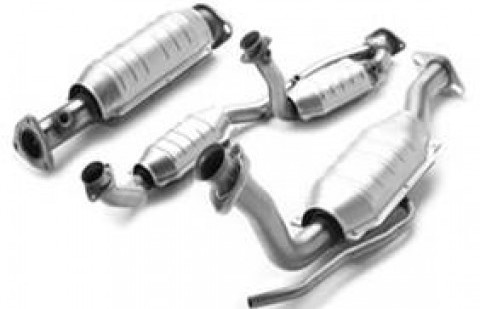
The catalytic converter is the component that functions to lessen the toxicity of emissions from an internal combustion engine.  A defective catalytic converter can influence the damage of your engine, so it must never be taken lightly.  Here are some tips to help you spot a damaged converter.

Basically, a catalytic converter is defective when it becomes clogged, poisoned or shows sign of physical damage.  When it becomes clogged, you may feel in a decline in vehicle performance and a noticeable drop in fuel economy levels.  This is because if your convertor is clogged, it will trap exhaust gas in front of the catalyst. When this gas it trapped, it creates back-pressure that can prevent the engine from breathing normally.  Then, the higher back-pressure can also result in the engine quitting after a few minutes of driving, or at least make the engine feel like it is starved of more fuel.  In some cases, you may hear a whistling sound when the throttle is applied indicating a restricted exhaust flow or catalytic converter problem. 

One of the telltale signs of a catalytic converter problem is when you hear rattling noises coming from the catalyst, which sound like they have broken apart from the converter casing or converter shell.  You can observe these strange noises more as the car is idling or decreasing in volume as speed is increased.  If you discover that your converter has failed, you should try to determine why exactly it has failed in order to avoid the same problem in the future.

Causes of failure

One common cause for failure is a defective oxygen sensor.  Another is failing to schedule a tune-up on time.  A defective oxygen sensor (O2 sensor) can cause the engine to run out of tune causing the converter to break down.  Keep in mind that oxygen sensors should be replaced regularly according to your vehicle manufacturer specifications, as they are a regular maintenance item.  What you can do is to change your oxygen sensor on a regular basis with a reliable brand.   

The good news is that there are currently many choices of catalytic converters out in the market that may fit your vehicle.  One choice is a direct fit catalytic convertor which can be bolted up even without welding.  Or if you prefer to go for increased performance, there are also several high performance converters to choose from.  A high flow catalytic converter matched with a performance cat back exhaust system will help you have increased horsepower because the lower back-pressure will let your engine breathe better.

Whatever choice you make, you can select from a variety of catalytic converters on our large catalogue of vehicle components.  Choose the right one that fits your car from a range of high-quality and reliable parts.  Go to autopartsway.com to learn more.

Tips and Tricks for Clutch Repair Jobs

clutch repair

The clutch is that part of your vehicle that controls the slippage between the engine and the transmission.  The vehicle’s wheels don’t spin when the engine does, so the function of the clutch is to let the wheel disconnect from the engine.  This will allow the driver to change gears and the car to stop without killing the engine.  Here are a few tips, tricks and some timesavers that you need to know about the clutch.

  • It you overheat the clutch, it can critically weaken the flywheel.  If you observe a cooked clutch, you must remove the flywheel and have it Magnafluxed in order to ensure that there would not be any radial or any other cracks leading away from the bolt holes.
  • The input shaft splines should be able to freely slide back and forth when you test the new disc.  If this does not happen, a rust or a small nick may be hanging it up.  You can use a fine hand file or emery cloth to get rid of an of those small nicks or burrs in the input shaft splines or clutch hub.
  • You must test fit the pressure plate of the flywheel prior to the final assembly to recognize any interference problems or binding on the locating dowels.
  • Remember that a curved face throw-out bearing must always be used with straight pressure plate levers; and conversely, a flat-faced throw-out bearing must always be used with curved pressure plate levers.
  • The flywheel must be smooth and flat for the clutch disc to have the appropriate grip.  If there are visible signs of scoring, uneven wear or burn marks, you should have the flywheel resurfaced.  A light cut can be taken off the face and result in a much better performance.
  • Keep in mind to mark the location of the flywheel at all times before unbolting.  This helps you to reinstall it in the exact same position, and it is very important to maintain engine balance on some applications.
  • Each time you have a flywheel resurfaced, you must check the mounting hole counterbore depths.  Removing too much material leads to the pressure plate mounting bolts to run out of thread.  Then, the pressure plate cover won’t be pulled down solidly against the flywheel.  Double checking is key.
  • If the flywheel has not been removed, it is always a good idea to re-torque the mounting bolts in a crisscross pattern according to your vehicle manufacturer’s specifications.
  • Before reassembling the clutch, the flywheel and pressure plate must be carefully cleaned with a non-petroleum based solvent, and then dried with compressed air.  Do not use wiping cloth or rags in drying the parts. 
  • Use a high-temperature grease to lightly coat the input shaft splines, clutch hub, and throw-out bearing hub and face.  This will help you make sure that everything is working smoothly.
  • It is necessary to use proper alignment tools, and if you do not have one yet, avoid blind-guessing to line up the clutch with the pilot bearing.  Otherwise, you will spend a long time trying to force the transaxle into a misaligned clutch.
  • Make sure to install the disc in the correct direction with the hub assembly away from the flywheel.
  • Upon installation, the pressure plate mounting bolts finger must be locked-in tight.  Then, torque them gradually in a crisscross pattern to keep the pressure even around the circumference of the pressure plate.
  • Use new high-strength fasteners and lock washers at all times in changing a clutch assemble and a thread lock in order to help the bolts avoid working loose.
  • Check the release lever for any wear or misalignment.  Then, remember to lubricate the clutch release lever contact points and pivot before the final assembly.
  • Don’t allow the weight of the transmission to hang from the disc.  Make sure that the engine and transmission are fully mated together before you relieve the transmission support.
  • If you have any doubt about any component, it is wise to consider replacement.  If you keep using or re-using a damaged part like a pilot bearing or a throw-out bearing, it will only cost you more in the future.

Finally, always test drive a new clutch job before delivery to make sure that everything is operating properly. 

If you would like to purchase high quality car components with great discounts, check out our website at autopartsway.com.

Troubleshooting the Starter and Vehicle Starting Circuit

engine starter

Before performing the tips in this article, it would be best if you conduct a starter performance test using an alternator or starter test bench.  In doing this, if the starter is not performing well, it is necessary to resolve any additional vehicle side problem in the starting circuit that may have affected the starter.  On the other hand, if the starter meets your vehicle manufacturer’s specifications, you should also look up the service manual in order to inspect the car’s starting circuit and to be able to identify the problem and possible solutions.  Then, in order to identify the true starting circuit problem, you can use the following troubleshooting questions.

  1. Does the starter turn the engine too slowly?  If so, verify the battery charge, battery cables, ignition timing, engine oil and engine modifications.  You should check if the battery is fully charged, and if the battery cables and terminals are in good condition.  If the engine has been modified and has increased compression ratio, these could influence the starter’s inability to turn the engine.  Note that improper engine timing, if it is more advanced, or if the engine oil is excessively viscous, these are also factors affecting the starter’s performance.
  2. Does the starter fail to crank the engine?  If the answer is yes, you must check the battery, the battery cables and the terminals.  Make sure that both the ends of the battery cables are inspected for proper connection and are kept clean.
  3. Does the starter try to turn the engine, but then just spins free? When this happens, check the flywheel ring gear or the flex plate, and inspect if there is excessive wear and missing or damaged teeth.  Similar symptoms would be found in failed starter drives.  Then, the flywheel teeth can be inspected through the starter access or mounting opening.  In order to find excessive wear, check areas such as the four cylinder engines, two positions, 180 degrees apart, six cylinder engines, two positions, 120 degrees apart and eight cylinder engines four positions, 90 degrees apart.
  4. Does the starter click when trying to start the engine?  Supporting questions to this are, has the ground circuit between the battery and the engine been checked for high resistance?  Or have the battery cables and terminals been inspected for damage, wear, corrosion and loose connections?  If the solenoid or relay clicks and your starter fail to turn, your problem could be a loose connection, or some damage in the wires.  Then, you should check the battery cables’ voltage drop to ensure that the resistance is high enough to meet the vehicle manufacturer’s recommendation.
  5. Is there a clattering sound when trying to start the engine?  If you hear such noise, one possible cause is a bad flywheel or ring gear.  Another possibility could be an inoperable starter solenoid or low battery voltage.  Make sure that your battery is fully charged, and all the battery cables and terminals remain in good condition.

Finally, keep in mind that these tips are mainly general information for troubleshooting your starter and vehicle starting circuit.  While these tips might be helpful, they are best used along with the service manual that contains the proper specifications.

If you would like to purchase high quality car components to help your home troubleshooting, check out autopartsway.com.  We offer a wide variety of parts with the best discounts online.

Tips for Turbocharger Installation and Maintenance

turbocharger

Do you know that 90% of all turbocharger failures are due to some unfavorable operating conditions, and problems that are easily avoidable?  It is necessary that all of the components are properly installed and maintained, because these units have close tolerances and clearances, and usually operate at high speeds.  If you would like to ensure the longest possible service life, always utilize proper operating procedures, and maintain clean air and fresh lubricating oil.

To help you, here are some tips and procedures to prevent the usual causes of turbo failure.  As an additional word of caution, always make sure to use these tips in conjunction with the specific recommendations and operating procedures of your vehicle’s manufacturer.

Proper Installation

There are turbo installations that are metal-to-metal fit and require no mounting gaskets.  For these, you do not need to use any additional gasket material.  Note that at 100,000+ rpm, even a small amount of loose sealant will destroy the compressor wheel.  So if the manifold surfaces are damaged, you must repair or replace it.

Then, clean all the connecting hardware and fittings.  Also, visually inspect the pipes, hoses or ducting, and replace them as needed.  Next, check for adequate oil supply, or if there is enough functioning oil pressure or filter system.  The oil supply lines must also be checked because flexible lines can degrade from the inside-out, which can cause the pieces to be flushed down to the new turbo and eventually clog the oil-feed ports.  Make sure that the hard lines are not bent, because this will cause the material inside the pipe to loosen and be flushed down the pipe upon start-up and clog the ports.

Next, check the filter elements and screens, and see if your system has a filter screen in the oil supply line.  If so, it may not have a bypass feature.  So, if the line is blocked, the turbo will be deprived of the oil it needs and swiftly fail.  If you have this kind of system, you must have it checked periodically.

Maintenance and Service

As far as care and prevention, you must avoid the penetration of foreign bodies into the turbine or the compressor.  Ensure that there is no debris in the air box.  Then, air cleaner elements should be replaced or thoroughly cleaned.  Also, prevent any dirt from contaminating the oil.  Make sure to change oil and oil filters regularly, especially after new turbo installation.

Tips for Operation

Proper use of the vehicle also helps prolong the turbo life of your car.  Thus, avoid operating the vehicle for very long periods that are beyond the design performance parameters.  These prolonged periods can generate excessive heat, and when you overheat the engine too much, that breaks down the oil and produces high exhaust gas temperatures, which will affect the ignition system and injection system.

Another tip is to avoid hot shut down.  This means that if the temperature is high, allow your vehicle to idle and cool down to a lower, normal temperature.  Once the engine, its systems and the oil are cooled down, you will prevent the burning or caking of the oil, and these all result to component failure or reduced performance.

Remember that all these tips are or turbo equipped vehicles and applications.  If you would like to purchase high quality car components online with great discounts, check out autopartsway.com.

5 Tips to Help You Become a D-I-Y Auto Mechanic

car tools

Whether you want to perform a do-it-yourself (DIY) repair on your car by yourself for the savings, or because you want to be the only one to touch your precious vehicle, or you simply want to be prepared for any unwanted incidents, it is a must to have the necessary tools and knowledge to be your very own auto mechanic.

Thankfully, the internet can now provide various tips and tricks for your car’s repair and maintenance.  You can virtually find all the details you want for any type of car problem—from troubleshooting funny noises to solving engine problems, to finding the best type of engine oil.

More than that, more and more people are buying auto parts online from credible and reliable sources like Autopartsway.com.  Ordering parts online not only offer discounts, but also allow you to make your own simple installs and repair jobs and save even more money.  Let’s face it, paying a mechanic for such simple jobs such as replacing filters or some nuts and bolts, can only bring you longer, yet unnecessary repair bills.  However, before you do attempt any DIY task or try an unfamiliar process in hopes of repairing some part damage, keep in mind some valuable guidelines, or else you might end up causing bigger problems for you and your car.

DIY Tip 1.  Purchase a repair manual or CD for your specific vehicle.  You will soon find that most repair instructions online would ask you to check your manufacturer’s recommendations.  Thus, it’s advisable to keep a paper manual, because it would be a handy reference for your car’s specific needs.  You can also print out instructions you might find on the repair CD, just for easier reading.

DIY Tip 2.  Make sure that you have all the necessary and correct tools for the job.  Invest in a good tackle box with all the bolts and screws, and all the other tools you might need.  Luckily, most of these tools are sold in sets, so you would not need to worry about picking out individual pieces.  You may also want to think of extensions and flex-heads for those ratchets and hard-to-reach areas.  Moreover, in some cases, you may need special tools for certain tasks, so before you attempt a repair, make sure you have bought all the parts and tools that you need, or else you might need to stop in the middle of a repair just because you are missing one item.

DIY Tip 3.  Dealing with nuts and bolts may seem like a simple task, but before you remove any parts or hardware that is rusted or corroded, it’s a good idea to treat them first with some sprays that would help loosen them.  Without doing this, you can easily strip or break those nuts and bolts, and if you break one, it might be impossible to take them out except to drill or cut them.

DIY Tip 4.  Organize by labeling all your materials.  You can use small aluminum trays and even zip-lock bags to keep your parts and tools visible and sorted from each other.  Working with trays will also give you some space to clean some parts before installing them.  Good organization will also help you avoid losing those parts and tools, or even terrible instances where a nut will fall into a crevasse in the engine and it’s simply impossible for you to reach.  All in all, working in an organized manner will make any repair and re-assembly a more efficient process.

DIY Tip 5.  Finally, while being a DIY-er has its benefits, do not do any major repairs if you are not comfortable.  You must always care for your safety first, and if you have a good amount of discomfort, this can be a tell-tale sign that you should not move forward.  An improper repair can not only cause major damage to your car, it can also compromise your safety.  If you do want to save money, you can still order the parts you need from your favorite online parts store, and ask your neighborhood trusted mechanic to repair the car and deduct the price of the parts from your repair bill.

For all your tools and parts needs, check out Autopartsway.com.  We offer high quality components with great discounts that will help you with those DIY projects. 

Switch to our mobile site