Tag Archives: automotive

Automotive DIY for beginners

Oftentimes, I get a phone call from a friend whose car is in the shop and they ask my opinion on a shop’s estimate. Eventually, I get around to asking said friends why they don’t just fix it themselves and save themselves a boatload of money. Invariably, they proclaim that they simply don’t have the knack for it. They look at my tendency to take a wrench to anything that has wheels as some divine-given talent.

What should be obvious is that I wasn’t born knowing how to do this kind of work. I started the same way as any beginner – one repair at a time. What most people don’t realize is that you can handle a lot of DIY maintenance and repairs on your own without knowing how every single nut and bolt on your car works. You pick a simple maintenance item to start with, and move up in complexity from there. What you need to keep in mind is that your car was designed and built by people just like you, and there’s no magic behind what makes it work.

Where, then, should the novice begin? Ideally, if you’re new to working on your own car, you should start BEFORE you have a breakdown in the middle of the night in an unknown area with no cell phone reception. I always recommend starting with the basics, as I did – and it doesn’t get much simpler than an oil change. This is a great place to start because it’s a maintenance item that’ll come up frequently and is generally easy to tackle. The specifics differ from car to car, but the process pretty much goes as follows:
1.raise front of car
2.remove oil cap
3.drain old oil
4.remove and replace oil filter
5.fill engine with fresh oil
6.replace oil cap
7.make note of date and mileage of oil change
8.dispose of old oil

Your owner’s manual should tell you how much oil and what kind you’ll need to buy. For that matter, your owner’s manual is a great source of information on basic DIY items. If you haven’t read through it, I highly recommend doing so. It’ll show you how to check fluid levels and usually how to top them off if needed. A good rule of thumb to follow is that if the manual gives you specific instructions, then it’s probably a simple enough item for you to handle on your own. On the other hand, if the owner’s manual tells you to take your car to a dealership, then that item is probably not suited to the beginner DIY-er (though it might be a job you’ll be comfortable handling in the future).

Whatever you do, the most important thing to do is to arm yourself with knowledge. Start with your owner’s manual. Purchase a quality repair manual if you feel you need more information. Most of all, make sure you understand the job and the risks involved before you begin.

Car Upgrades: High-End Features You Can Do Without

Car owners, especially enthusiasts, treat their car as a reflection and extension of character. Enthusiasts with money to spare often upgrade their vehicles with the latest in audio, video, and navigation electronics as well as body kits. However, this is an expensive hobby for regular car owners.

While most upgrades prove to be useful in the long run, other upgrades and accessories  won’t do much good for your car’s resale value, nor improve your vehicle’s overall performance.
Nitrogen-filled tires

It is common knowledge that properly inflated tires lead to an increase in fuel efficiency.  Compared to regular air, nitrogen is not subject to temperature change and has little reaction to other chemicals, thus minimizing the contraction and expansion of tires. As such, nitrogen  not only increases fuel efficiency by lessening rolling resistance but also prolongs tire life. As good as it sounds, there is one thing car owners must not forget: tires are designed to be filled with good ol’ regular air. Also, with the significant amount of nitrogen in standard compressed air – about 78% – there really is not much of a difference.

Custom-hinged Doors

While conventional car doors are hinged at the front-facing edge of the door, custom-hinged doors are hinged at the most unique locations. For example, a suicide door is hinged on the trailing edge located near the rear of the vehicle, while butterfly doors, often seen in high performance vehicles, enables a car door to move up and outwards. Aftermarket door conversions attract a lot of car owners, but expect that this stylish upgrade is as expensive as it can get.

High-definition audio system

Compact disks are out as compressed, digital music formats today are played in audio systems compatible with USB playback or an IPod auxiliary support. Some car owners, however, go beyond these modern audio playback devices by mounting high-definition speakers at the rear and in the front. Expensive and without contribution to a car’s performance, an audio system upgrade is a luxury you can do without.

Body Kits

A collection of exterior modifications, a body kit is a styling upgrade also designed to enclose the gap between the bottom of the fuselage and the ground. While vehicles with original ground effects reduce lift and increase control, aftermarket body kits only simulate their appearance and have no significant aerodynamic effects.

These are just some aftermarket car upgrades and accessories popular in the industry today. While all these could add impact to your vehicle, it’s always a wise investment to spend money on body parts and components that can increase its safety and improve engine or transmission performance.  For a wide variety of useful, high quality components with great discounts, check out autopartsway.com.

Top 10 Car Brands in the US, Europe and China

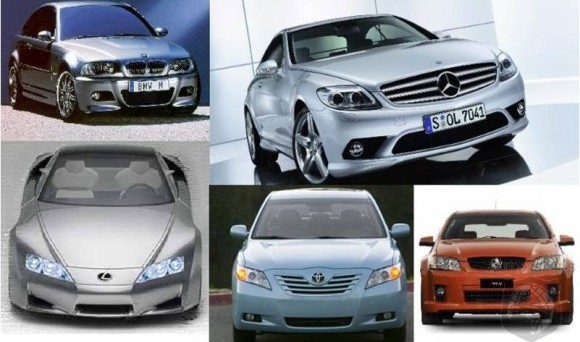
car pics

The recent Detroit International Auto Show set the stage for which trends would rule the North American market, or possibly even a wider market.  But did you know that the list of Top 10 best-selling cars in the US, Europe and China are quite different from each other?  With automotive markets merging and being more globalized, it is very interesting to check which cars are famous in other parts of the world. 

It is always noteworthy to feature the Top 10 list of the US, being a significant market in the industry. Same goes for Europe, which collectively is still the biggest automotive market in the world.  But, as an individual country, it is China which has the biggest overall market share.  In 2010, more than 11 million cars were sold in China alone, which showed a 35.5 percent increase from the previous year.  Meanwhile, US sales reached over 9.6 million, while Europe had a total of over 11.6 million vehicles sold collectively from 27 countries.

 Here’s a quick look at the Top 10 lists in each country: (partial results compiled at the end of October 2010)

 U.S.A.

 1. Ford F-Series (434,920). America’s longtime bestseller stays on top, with sales strengthened by farm, construction and home repair workers.

2.  Chevrolet Silverado (301,998).    Even combined with heavy duty and GMC Sierra sales, GM would still be in second place, with a total of 405,216.

3. Toyota Camry (275,844) Loads of incentives keep it ahead of archrival Honda, despite severe hits to its reputation.

4. Honda Accord (236,278)  Midsize stays strong halfway through its lifecycle, and is more profitable than Camry.

5. Toyota Corolla (227,822) Many people automatically buy the Corolla, even as it quickly ages.

6. Honda Civic (215,393)Though no longer sold in its home country, Civic stays strong in the last year of its cycle.

7. Nissan Altima (187,875) Another familiar midsize sedan due for replacement.

8. Ford Fusion (178,943) The 2010 Car of the Year has been aggressive in its pursuit of dominant Asian competitors.

9. Chevrolet Malibu (175,599) GM has moved up development of the ’12 Malibu, now expected mid-year.

10. Hyundai Sonata (166,628) Redesign helps it crack the Top 10 and push Hyundai’s U.S. sales over 500,000 for the first time.

 EUROPE

 1. Volkswagen Golf (420,344 ) Hatches have long been Europe’s favorite.  .Jetta is not nearly as popular in Europe.

2. Ford Fiesta (351,177 ) Ford is struggling a bit in Europe, and Fiesta sales started to slide toward the end of ’10.

3. VW Polo (301,107) VW’s Ford Fiesta/Honda Jazz (Fit)/Opel Corsa fighter is like the Corolla to Golf’s Camry.

4. Renault Clio (286,100) Golf competitor shares its platform with Nissan’s compacts, including US Versa.

5. Opel/Vauxhall Corsa (266,878) Sales of GM’s B-segment hatchback started to fade in the fall.

6. Peugeot 207 (259,402) Competitor to the VW Golf and Renault Clio from the Peugeot-Citroën Group.

7. Opel/Vauxhall Astra (247,706) Another Golf fighter, and one of four cars on this list trending with better sales than in ’09.

8. Ford Focus (224,130) Sales started to trail off as Ford prepared to introduce the all-new One Ford model.

9. Renault Megane (221,671) Bigger than the Clio, with two- and four-door hatch, sedan, coupe, and cabrio variants.

10. Fiat Punto (221,213) Fiat’s C-segment hatchback

 CHINA

 1. BYD F3 (217,300)  Build Your Dreams’ tidy four-door borrows much of its styling from Toyota’s Corolla.

2. Shanghai Volkswagen Lavida (201,500) This China-only model is derived from a MkIV Jetta floorpan, with a stretched wheelbase.

3. Beijing Hyundai Elantra Yuedong (191,800)  A mildly restyled variant of the outgoing 2006-’10 Elantra four-door sedan.

4.  FAW VW Jetta (191,800) VW partner FAW still builds the second-gen Jetta – face-lifted three times.

5. Shanghai Buick Excelle (186,200)  The next gen of this Suzuki Forenza variant will be sold here as the ’12 Buick Verona.

6. Shanghai VW Santana (167,200)  Based on the early ’90s Passat, it has long been a taxi fleet staple. A decade ago it was China’s most popular car.

7. Tianjin FAW Xiali (155,500) Its not clear which model leads sales, but several are based on Toyotas and Daihatsus.

8. Shanghai Chevrolet Cruze (147,900) Chinese version of the US’ Chevy Cruze.

9. FAW VW Bora (142,600) The Chinese share US preference for sedans over hatchbacks.

10. Guangzhou Honda Accord (140,600) US number 4 is China’s number 10. Guangzhou builds the North American, not the European (Acura TSX), Accord.

 Looking at these lists, if a conclusion was to be made, it would seem that the US market seems to favor C and D segment sedans, while China and Europe prefer the C-segment sedans and hatches.

If you want to find the most reliable online shop for great deals for various car parts for these top brands, check out Autopartsway.com

U.S. data compiled by Forbes magazine; China data from China Association of Automobile Manufacturers; Europe data from Jato Dynamics

GM CEO Reveals New Customer-Focused Strategy

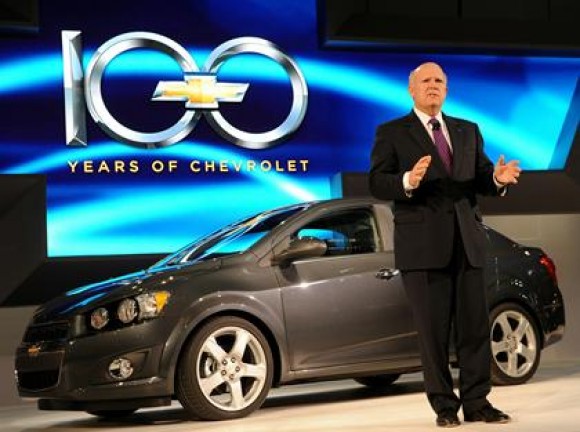
GM's Dan Akerson

In the last two decades or more, the senior managers at General Motors Co. have had their focus on making products that fit the production capabilities of their plants, rather than highlighting the needs and wants of their customers. Then came the heavy debt load and ballooning costs of health care, as well as the surplus of well-paid workers—GM was in deep trouble.

But after this much talked about bankruptcy and the much needed restructuring that followed, GM was able to get rid of the many contractual and financial obligations that were weighing this automotive giant down.

Now, its new CEO Dan Akerson is initiating a major shift in focus: a customer-centric orientation.

The new direction means that GM is now free to design cars that appeal directly to customers. With its recent recovery in sales, the company can now introduce new models faster, as well as strengthen its overall advertising efforts and reinforce GM more as a marketing organization.

Joel Ewanick, GM’s first ever Global Chief Marketing Officer, claims that this shift in focus is a rare opportunity that GM is capitalizing on now that they have the momentum of having rising profits (after six years) and newly-introduced models that have become sales hits. They are hoping this momentum would drive them to build cars that people would want to buy, rather than cars that the company needs to sell. This new appointment is just one of Akerson’s strategies to reshuffle GM, which has had four CEOs in less than two years.

Ewanick has been known mostly for building Hyundai’s growing presence in the U.S., and his new task at GM is to elevate the consumer’s point of view into GM’s product planning and strategic decisions, gathering top management support along the process. Also part of this new job is to gather customer feedback through his staff and communicate these to the product team.

Some of the results of the focus group discussions initiated by Ewanick include bolder style and design improvements to grab the attention of the more modern buyers of today. Part of this will be adding more creature comforts and innovative parts throughout the car. Another is the direction to officially move Buick from the “near luxury” to being a luxury brand. Now, Buick is set to directly compete against Lexus, with an understated luxury approach.

Of course, even with all these improvements, GM still has a long way to go if they want to regain the leadership that they have held and lost.

Still, it is worth seeing what this determined automaker has in store for the next couple of years, both in terms of its revised strategies as well as its new product offerings.

If you would like to buy high quality parts with great discounts for your GM or other top auto brands, check out Autopartsway.com.

Switch to our mobile site