Monthly Archives: September 2011

Toyota Wins Dismissal of Speed-Up Case Set for First Trial

Sept. 29 (Bloomberg) — Toyota Motor Corp. won dismissal of the first sudden acceleration lawsuit set for trial in California in 2013 because a federal judge determined it should have been filed in state court in Utah.

Toyota, the world’s largest automaker, recalled at least 8 million U.S. vehicles starting in 2009, after claims of defects and incidents involving sudden unintended acceleration. The recalls set off hundreds of economic-loss suits and claims of injuries and deaths. The first test case was set for trial in February 2013.

U.S. District Judge James V. Selna in Santa Ana, California, today dismissed that first bellwether case, brought by the families of two people killed in a crash in Utah in 2010, finding a federal warranty claim in the lawsuit failed to meet a required $50,000 threshold for damages. The plaintiffs couldn’t count potential personal injury or punitive damages to reach this requirement, under federal law, Selna said.

“Plaintiffs are unable to reach the jurisdictional threshold of $50,000 in damages,” Selna said. “The case is dismissed for lack of jurisdiction.”

The ruling won’t keep the case from being tried or from remaining in federal court, Mark Robinson, an attorney for the plaintiffs, said in a phone interview. The warranty claim, brought under the federal Magnuson Moss Warranty Act, was aimed at the dealer and isn’t essential to the lawsuit against Toyota, Robinson said.

‘Everything Else’

“I am drafting a new complaint right now in which the dealer will not be named as a defendant and everything will be cured and the suit will go forward seeking punitive damages and everything else,” he said.

“We are pleased this jurisdictional issue has been resolved and that the court agrees with Toyota that the proper forum for this case is Utah state court,” Celeste Migliore, a Toyota spokeswoman, said in an e-mailed statement.

The Utah lawsuit was filed on behalf of Paul Van Alfen, who died when his 2008 Toyota Camry crashed into a wall, and passenger Charlene Lloyd, who died the next day.

Van Alfen’s wife and son were injured in the 2010 crash and are suing as well. The families say the accident happened when the vehicle unexpectedly accelerated as Van Alfen pulled onto an exit ramp on I-80 near Wendover, Utah, and didn’t stop even after he slammed on the brakes.

The families alleged the Camry was defective and the Toyota City, Japan-based carmaker failed to include a brake override system or device to stop inadvertent acceleration.

First Test Case

The Van Alfen case was selected in June as the first test case in the sudden acceleration claims before Selna. A bellwether case is used by the court and lawyers for both sides to test evidence and liability theories before moving on to other trials or limiting future litigation.

Lawsuits were combined before Selna in a multidistrict litigation for evidence-gathering and pretrial rulings.

The Utah lawsuit is Van Alfen v. Toyota Motor Sales USA Inc., 2:11-cv-04143, U.S. District Court, Central District of California (Santa Ana). The cases are combined as In re Toyota Motor Corp. Unintended Acceleration Marketing, Sales Practices and Products Liability Litigation, 8:10-ml-02151, U.S. District Court, Central District of California (Santa Ana).

Original Article

Video: 2012 Volkswagen Passat TDI commercial shows you can learn a whole language before refueling

Volkswagen commercials have always known to be pretty witty. That’s definitely the case in the new commercial for the 2012 Volkswagen Passat TDI called – ‘Vamonos.’

The commercial shows two friends taking a road-trip and instead of listening to music – the driver pops in a ‘Teach Yourself Spanish’ CD. The two end up driving for 13 hours without refueling… and without music.
Refresher: The 2012 Volkswagen Passat is offered in three trim levels, S SE and SEL. Entry-level 2012 Passat models are powered by a 2.5L 5-cylinder engine making 170-hp and 177 lb-ft of torque. Standard transmission choice include a 5-speed manual while an optional 6-speed automatic is available. Moving up, buyers can pick a 2.0 TDI Clean Diesel 4-cylinder unit making 140-hp and 236 lb-ft of torque. Mated to a 6-speed DSG transmission, the 2012 Passat TDI gets 43 mpg on the highway and a range of approximately 800 miles. The range-topping 2012 Volkswagen Passat is powered by a 3.6L VR6 units producing 280-hp and 258 lb-ft of torque. Mated to a 6-speed DSG, the 2012 Passat VR6 will get 28 mpg on the highway. Prices will start around $19,995.

Article Source

BMW i 3 Concept. The Megacity Vehicle.

bmwmain

BMW i 3 Concept.
The Megacity Vehicle.
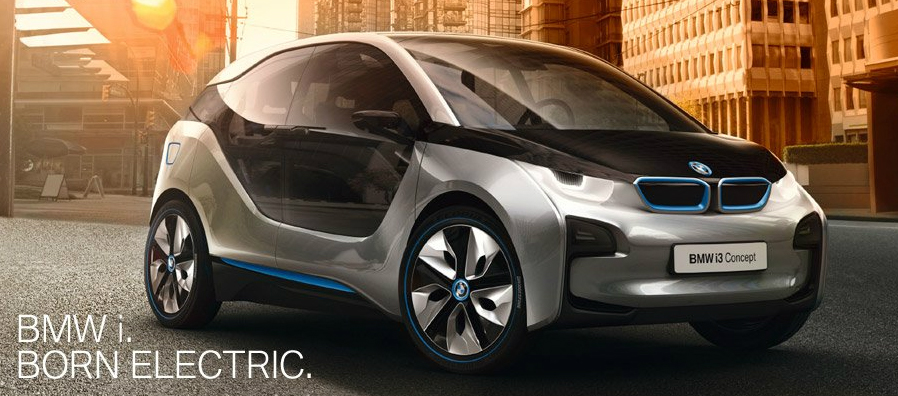
The BMW i3 Concept is an uncompromisingly sustainable vehicle designed for urban areas. Driven purely by electric power and purpose-built to meet the demands of sustainable and emission-free mobility it embodies an intelligent form of urban transportation and commuting.
BMW i3 Concept – Sustainable Urban Mobility.
The BMW i3 is a designed all encompassing concept, with every detail conceived and optimised to fulfil its eventual purpose. Its innovative LifeDrive architecture renders the BMW i3 Concept light, safe, spacious and dynamic. Innovative use of materials and intelligent lightweight design, moreover, not only enable the i3 Concept to travel long distances on a single charge, they also provide superb safety in the event of a collision and help give the car its excellent driving dynamics.
The electric motor over the rear axle – which generates output of 125 kW/170 hp and impressive torque of 250 Nm (184 lb-ft) from a standstill – and a small turning circle combine to deliver agile driving characteristics. The BMW i3 Concept accelerates from 0 to 60 km/h (37 mph) in under four seconds and from rest to 62 mph in less than eight seconds.
The Life module conjures up a generous feeling of space inside the car. Select materials lend the open and airy cabin a lounge-like character. The use of renewable raw materials is another defining characteristic of the interior, offering passengers a further means of “experiencing” the sustainability of the vehicle. Parts of the instrument panel and door panelling are visibly made from natural fibers, while the naturally tanned leather of the seats creates a lounge-style ambience. With four seats, wide-opening opposing “coach” doors, a trunk capacity of around 200 litres and an additional functional compartment in the front, the BMW i3 Concept is equipped for the demands of everyday use.
Innovative connectivity functions create a seamless connection between the BMW i3 Concept and its customers’ lives outside the car. Remote functions accessible via a smartphone enable owners to find their vehicles, locate nearby charging stations, allow battery charging and preconditioning at the touch of a button, and supply information on the current status of the vehicle. Meanwhile, intelligent BMW ConnectedDrive assistance systems ease the stress on drivers in monotonous city driving situations and allow them to arrive at their destination more safely and in a more relaxed state of mind.
BMW i3 Concept – compact, agile, sustainable.
The design of the BMW i3 Concept reveals the car’s qualities the first time you set eyes on it. The BMW i3 Concept represents the dynamic interpretation of an impressively practical vehicle.
Dynamic and compact proportions showcase the agility of the BMW i3 Concept and its electric drive train. From the side view, the window graphics and door sills combine to create a dynamic wedge shape, giving the car the feeling of pushing forward before it even turns a wheel. From the outside, a flowing silhouette hints at the extraordinarily generous levels of space on offer in the interior, while short front and rear overhangs make parking in tight spaces that much easier. Practicality gets another boost from the “coach doors”, whose opposing construction creates a fresh new way of accessing the large, open spaces of the interior.
Extensive glass surfaces and black elements like the window surrounds and door sills give the vehicle a feeling of lightness and, together with the exposed carbon structures, draw attention to its low weight. Large narrow 19-inch wheels add further impact to the dynamic side profile.
The front end of the BMW i3 Concept has a very clear and uncluttered design. The dominant element here is the strikingly molded kidney grille which has the hallmark BMW i blue background and – thanks to the car’s all-electric drive system – is totally blanked off. Below the kidney grille the silver-coloured layer lends the sculptural front apron its form. Black surfaces identify the functional areas of the front end, such as the load compartment under the hood and the air inlets.
Clearly defined AirCurtains also lend visible expression to the honed aerodynamics of this BMW i model. The eye-catching LED headlights usher in a fresh take on BMW light design. Along with the strikingly formed kidney grille, the LED-backlit U-shaped lines form an important part of the arresting new BMW i face.
The functional back end.
The large, rear window offers optimum access to the luggage compartment, and the roof pillars stand upright to create as much space as possible in the interior. The rear window is also home to the tail lights, which are U-shaped (like the headlights) and appear to be floating in the glass. Behind it lies an extremely versatile boot area, whose capacity can be further increased by folding down the rear seats.
The wide, silver-colored rear diffuser marks the body’s lowest edge and allows the driver to experience the car’s efficient aerodynamics. Bordered by a blue layer, the diffuser tapers heavily towards the road and appears to continue underneath the car. The form of the diffuser underlines the car’s powerful stance. A sportier version can be found on the BMW i8 Concept, forging a link between the two models.
Self-supporting and light – the interior.
The version of the LifeDrive architecture that underlies the BMW i3 Concept opens up totally new avenues in interior design. There is no center tunnel bisecting the cabin and the interior thus creates a very free, open and airy impression.
The passengers sit in a raised “semi-command” position which provides a good view over the hustle and bustle of city traffic and, at the same time, eases access to the seats.
The full-width seat benches in the front and rear create a new and connecting feeling of space for the passengers in the light interior. This layout also allows them when parked to move from one side of the car to the other and, if necessary, to all exit  the car comfortably on the same side. This represents a major boost to comfort in tight parking spaces and when access to one side of the parked car is impeded.
A distinctive element of the light interior is the freestanding steering column. All the driving-oriented controls – such as the instrument cluster, start/stop button and gearshift lever – can be found here, rendering a center console superfluous. Behind the steering column the extremely intricate yet extensive instrument panel spans the interior. It begins at the air vents next to the steering wheel, continues in a line around the steering column, including the radio and climate controls, and finally moves on to the front passenger. Shortly before the front passenger door it then shears upwards, heads back towards the center of the interior and reaches the end of its journey in the central information display (CID) monitor positioned above the control panel for the radio and climate system. Around the displays, by contrast, the instrument panel design has large, wide surface sweeping prominently into a narrower and more delicate counterpart, before culminating in another wide section. The CID and control unit therefore present an attractive contrast to the clear, precise borders of the instrument panel.
The area around the instrument panel, the doors and the floor area of the BMW i3 Concept also feature contrasting materials. The natural origins of the high-strength dark anthracite material made from compressed and coated plant fibers are clearly evident and showcase the light, high-quality and beautifully crafted elements of the interior to optimum effect.
Interface design.
Connectivity – the linking up of the driver and passengers with the outside world and information superhighway – plays an important role in the BMW i3 Concept. Large displays act as interfaces between the vehicle and the outside world. The instrument cluster, meanwhile, emerges out of the steering column directly in front of the driver. Its freestanding design generates a very open feel around and above the driver’s head. Meanwhile, the central information display (CID) curves out of the black technical layer of the instrument panel’s upper section towards the passengers.
On another level, the highly technical-looking display graphics of the instrument cluster and CID lend visual form to the BMW i3 Concept’s electric drive philosophy. All the information is displayed in the high quality and visually appealing fashion you would expect from BMW.
The LifeDrive architecture of the BMW i3 Concept.
Both the BMW i3 Concept and the BMW i8 Concept feature the LifeDrive architecture, but the geometric implementation of the concept differs in the two concepts having been adapted to suit their different usages.
The BMW i3 Concept features a horizontal-split variant of the LifeDrive concept. Here, the Drive module provides the solid foundations for the Life cell, which is simply mounted on top. The reason for this functional rendition of the LifeDrive architecture is the large battery. In order to ensure the greatest possible electric range, the battery in the BMW i3 Concept is correspondingly large. The most space-efficient place to store the battery cells was under the car’s floor section, where they occupy the whole of the module’s central section, giving the car optimum weight distribution and a low centre of gravity. The battery is housed in an aluminum frame, which protect it from external impacts. Crash-active structures in front and rear provide the necessary energy absorption in the event of a front- or rear-end collision. The electric drive system is, as a whole, much more compact than a comparable combustion engine, cleverly accommodating the electric motor, gear assembly and drive electronics – in space-saving fashion – within a small area over the ear axle.
The integration of all the drive components within the Drive module removes the need for a center tunnel bisecting the interior through which power would previously have been transferred to the rear wheels. The BMW i3 Concept therefore offers significantly more interior space than other vehicles with the same wheelbase and – through solutions such as a full-width seat bench – also allows the interior to be adapted extremely effectively to the needs of urban mobility. The BMW i3 Concept offers comfortable accommodation for four passengers and, with around 200 litres of trunk space, room for their luggage as well.
The chassis of the BMW i3 Concept is also ideal for city driving. Its enviably small turning circle and direct steering responses result in outstanding agility, notably at low speeds.
All-electric – the BMW i3 Concept.
The electric motor of the BMW i3 Concept is designed primarily for operation in an urban environment, developing 125 kW/170 hp, with peak torque of 250 Nm (184 lb-ft). Typically an electric motor develops, maximum torque from standstill, in contrast to an internal combustion engine where torque increases with engine rpm.
This makes the BMW i3 Concept highly agile and provides impressive acceleration. The BMW i3 Concept accomplishes 0-37 mph in under four seconds and 0-62 mph in under eight seconds.
At the same time the abundant torque is delivered over a very large rpm range resulting in very smooth power delivery. The single-speed gearbox provides optimal power transmission to the rear wheels and accelerates the BMW i3 Concept to an electronically governed 93 mph without loss of power. The electric drive also allows for deceleration by means of the accelerator pedal. After the driver eases up on the accelerator, the electric motor acts as a generator, converting the kinetic energy into electricity which is then fed back into the battery. Energy recuperation generates a braking effect which makes a significant contribution to vehicle deceleration.
A coasting mode makes this unique “single-pedal control” of acceleration and braking using only the accelerator even more user-friendly. When the driver eases off the pedal, the electric motor’s zero torque control keeps the drive train disconnected as long as the pedal is in this position. The vehicle now coasts without consuming power, driven by its own kinetic energy.
Compact and powerful – the electric motor.
The electric motor of the BMW i3 Concept not only offers attractive driveability; its innovative nature is particularly evident in the favorable power-to-size ratio. As a result of continuous development and refinement, the space requirements of the electric motor used in the BMW i3 Concept have been reduced by 40 per cent compared with the motor used in the MINI E. This newly developed e-motor is already being used today in the BMW ActiveE. This compact drive unit is mounted over the rear axle, together with the power electronics, transmission and differential, and does not intrude into the interior. The power needed to drive the vehicle and to operate all other vehicle functions is supplied by specially developed lithium-ion battery cells. The BMW i3 Concept’s battery system is optimized which significantly reduces the extent to which external factors can influence the vehicle’s power. A intelligent liquid heating/cooling system keeps the battery at its optimal operating temperature at all times, which helps to significantly boost the performance and life expectancy of the cells.
The battery can be fully recharged in four hours using an installed wallbox. If a DC-fast charger is used an 80 per cent charge can be achieved in around 30 minutes.
Range extender increases the driving range.
As the MINI E field trial demonstrated, over 90 per cent of the mobility requirements of the MINI E field trial participants could be met with the range of the MINI E. However, some customers want a longer driving range, or want their vehicle to be as flexible as possible. The BMW i3 Concept therefore offers an optional range extender, the REx, which allows the driving range to be increased. REx, a small, very smooth-running and quiet petrol engine, drives a generator which maintains the battery charge level to ensure that the vehicle can continue to run on electric power.

BMW i 3 Concept. The Megacity Vehicle.The BMW i3 Concept is an uncompromisingly sustainable vehicle designed for urban areas. Driven purely by electric power and purpose-built to meet the demands of sustainable and emission-free mobility it embodies an intelligent form of urban transportation and commuting.

BMW i3 Concept – Sustainable Urban Mobility.The BMW i3 is a designed all encompassing concept, with every detail conceived and optimised to fulfil its eventual purpose. Its innovative LifeDrive architecture renders the BMW i3 Concept light, safe, spacious and dynamic. Innovative use of materials and intelligent lightweight design, moreover, not only enable the i3 Concept to travel long distances on a single charge, they also provide superb safety in the event of a collision and help give the car its excellent driving dynamics.
The electric motor over the rear axle – which generates output of 125 kW/170 hp and impressive torque of 250 Nm (184 lb-ft) from a standstill – and a small turning circle combine to deliver agile driving characteristics. The BMW i3 Concept accelerates from 0 to 60 km/h (37 mph) in under four seconds and from rest to 62 mph in less than eight seconds.The Life module conjures up a generous feeling of space inside the car. Select materials lend the open and airy cabin a lounge-like character. The use of renewable raw materials is another defining characteristic of the interior, offering passengers a further means of “experiencing” the sustainability of the vehicle. Parts of the instrument panel and door panelling are visibly made from natural fibers, while the naturally tanned leather of the seats creates a lounge-style ambience. With four seats, wide-opening opposing “coach” doors, a trunk capacity of around 200 litres and an additional functional compartment in the front, the BMW i3 Concept is equipped for the demands of everyday use.

Innovative connectivity functions create a seamless connection between the BMW i3 Concept and its customers’ lives outside the car. Remote functions accessible via a smartphone enable owners to find their vehicles, locate nearby charging stations, allow battery charging and preconditioning at the touch of a button, and supply information on the current status of the vehicle. Meanwhile, intelligent BMW ConnectedDrive assistance systems ease the stress on drivers in monotonous city driving situations and allow them to arrive at their destination more safely and in a more relaxed state of mind.

BMW i3 Concept – compact, agile, sustainable.The design of the BMW i3 Concept reveals the car’s qualities the first time you set eyes on it. The BMW i3 Concept represents the dynamic interpretation of an impressively practical vehicle.
Dynamic and compact proportions showcase the agility of the BMW i3 Concept and its electric drive train. From the side view, the window graphics and door sills combine to create a dynamic wedge shape, giving the car the feeling of pushing forward before it even turns a wheel. From the outside, a flowing silhouette hints at the extraordinarily generous levels of space on offer in the interior, while short front and rear overhangs make parking in tight spaces that much easier. Practicality gets another boost from the “coach doors”, whose opposing construction creates a fresh new way of accessing the large, open spaces of the interior.

Extensive glass surfaces and black elements like the window surrounds and door sills give the vehicle a feeling of lightness and, together with the exposed carbon structures, draw attention to its low weight. Large narrow 19-inch wheels add further impact to the dynamic side profile.

The front end of the BMW i3 Concept has a very clear and uncluttered design. The dominant element here is the strikingly molded kidney grille which has the hallmark BMW i blue background and – thanks to the car’s all-electric drive system – is totally blanked off. Below the kidney grille the silver-coloured layer lends the sculptural front apron its form. Black surfaces identify the functional areas of the front end, such as the load compartment under the hood and the air inlets.

Clearly defined AirCurtains also lend visible expression to the honed aerodynamics of this BMW i model. The eye-catching LED headlights usher in a fresh take on BMW light design. Along with the strikingly formed kidney grille, the LED-backlit U-shaped lines form an important part of the arresting new BMW i face.The functional back end.
The large, rear window offers optimum access to the luggage compartment, and the roof pillars stand upright to create as much space as possible in the interior. The rear window is also home to the tail lights, which are U-shaped (like the headlights) and appear to be floating in the glass. Behind it lies an extremely versatile boot area, whose capacity can be further increased by folding down the rear seats.

The wide, silver-colored rear diffuser marks the body’s lowest edge and allows the driver to experience the car’s efficient aerodynamics. Bordered by a blue layer, the diffuser tapers heavily towards the road and appears to continue underneath the car. The form of the diffuser underlines the car’s powerful stance. A sportier version can be found on the BMW i8 Concept, forging a link between the two models.Self-supporting and light – the interior.

The version of the LifeDrive architecture that underlies the BMW i3 Concept opens up totally new avenues in interior design. There is no center tunnel bisecting the cabin and the interior thus creates a very free, open and airy impression.

The passengers sit in a raised “semi-command” position which provides a good view over the hustle and bustle of city traffic and, at the same time, eases access to the seats.The full-width seat benches in the front and rear create a new and connecting feeling of space for the passengers in the light interior. This layout also allows them when parked to move from one side of the car to the other and, if necessary, to all exit  the car comfortably on the same side. This represents a major boost to comfort in tight parking spaces and when access to one side of the parked car is impeded. A distinctive element of the light interior is the freestanding steering column. All the driving-oriented controls – such as the instrument cluster, start/stop button and gearshift lever – can be found here, rendering a center console superfluous. Behind the steering column the extremely intricate yet extensive instrument panel spans the interior. It begins at the air vents next to the steering wheel, continues in a line around the steering column, including the radio and climate controls, and finally moves on to the front passenger. Shortly before the front passenger door it then shears upwards, heads back towards the center of the interior and reaches the end of its journey in the central information display (CID) monitor positioned above the control panel for the radio and climate system. Around the displays, by contrast, the instrument panel design has large, wide surface sweeping prominently into a narrower and more delicate counterpart, before culminating in another wide section. The CID and control unit therefore present an attractive contrast to the clear, precise borders of the instrument panel.

The area around the instrument panel, the doors and the floor area of the BMW i3 Concept also feature contrasting materials. The natural origins of the high-strength dark anthracite material made from compressed and coated plant fibers are clearly evident and showcase the light, high-quality and beautifully crafted elements of the interior to optimum effect.

Interface design.Connectivity – the linking up of the driver and passengers with the outside world and information superhighway – plays an important role in the BMW i3 Concept. Large displays act as interfaces between the vehicle and the outside world. The instrument cluster, meanwhile, emerges out of the steering column directly in front of the driver. Its freestanding design generates a very open feel around and above the driver’s head. Meanwhile, the central information display (CID) curves out of the black technical layer of the instrument panel’s upper section towards the passengers.On another level, the highly technical-looking display graphics of the instrument cluster and CID lend visual form to the BMW i3 Concept’s electric drive philosophy. All the information is displayed in the high quality and visually appealing fashion you would expect from BMW.

The LifeDrive architecture of the BMW i3 Concept.Both the BMW i3 Concept and the BMW i8 Concept feature the LifeDrive architecture, but the geometric implementation of the concept differs in the two concepts having been adapted to suit their different usages.

The BMW i3 Concept features a horizontal-split variant of the LifeDrive concept. Here, the Drive module provides the solid foundations for the Life cell, which is simply mounted on top. The reason for this functional rendition of the LifeDrive architecture is the large battery. In order to ensure the greatest possible electric range, the battery in the BMW i3 Concept is correspondingly large. The most space-efficient place to store the battery cells was under the car’s floor section, where they occupy the whole of the module’s central section, giving the car optimum weight distribution and a low centre of gravity. The battery is housed in an aluminum frame, which protect it from external impacts. Crash-active structures in front and rear provide the necessary energy absorption in the event of a front- or rear-end collision. The electric drive system is, as a whole, much more compact than a comparable combustion engine, cleverly accommodating the electric motor, gear assembly and drive electronics – in space-saving fashion – within a small area over the ear axle.

The integration of all the drive components within the Drive module removes the need for a center tunnel bisecting the interior through which power would previously have been transferred to the rear wheels. The BMW i3 Concept therefore offers significantly more interior space than other vehicles with the same wheelbase and – through solutions such as a full-width seat bench – also allows the interior to be adapted extremely effectively to the needs of urban mobility. The BMW i3 Concept offers comfortable accommodation for four passengers and, with around 200 litres of trunk space, room for their luggage as well.

The chassis of the BMW i3 Concept is also ideal for city driving. Its enviably small turning circle and direct steering responses result in outstanding agility, notably at low speeds.
All-electric – the BMW i3 Concept.The electric motor of the BMW i3 Concept is designed primarily for operation in an urban environment, developing 125 kW/170 hp, with peak torque of 250 Nm (184 lb-ft). Typically an electric motor develops, maximum torque from standstill, in contrast to an internal combustion engine where torque increases with engine rpm.
This makes the BMW i3 Concept highly agile and provides impressive acceleration. The BMW i3 Concept accomplishes 0-37 mph in under four seconds and 0-62 mph in under eight seconds.
At the same time the abundant torque is delivered over a very large rpm range resulting in very smooth power delivery. The single-speed gearbox provides optimal power transmission to the rear wheels and accelerates the BMW i3 Concept to an electronically governed 93 mph without loss of power. The electric drive also allows for deceleration by means of the accelerator pedal. After the driver eases up on the accelerator, the electric motor acts as a generator, converting the kinetic energy into electricity which is then fed back into the battery. Energy recuperation generates a braking effect which makes a significant contribution to vehicle deceleration.

A coasting mode makes this unique “single-pedal control” of acceleration and braking using only the accelerator even more user-friendly. When the driver eases off the pedal, the electric motor’s zero torque control keeps the drive train disconnected as long as the pedal is in this position. The vehicle now coasts without consuming power, driven by its own kinetic energy.
Compact and powerful – the electric motor.The electric motor of the BMW i3 Concept not only offers attractive driveability; its innovative nature is particularly evident in the favorable power-to-size ratio. As a result of continuous development and refinement, the space requirements of the electric motor used in the BMW i3 Concept have been reduced by 40 per cent compared with the motor used in the MINI E. This newly developed e-motor is already being used today in the BMW ActiveE. This compact drive unit is mounted over the rear axle, together with the power electronics, transmission and differential, and does not intrude into the interior. The power needed to drive the vehicle and to operate all other vehicle functions is supplied by specially developed lithium-ion battery cells. The BMW i3 Concept’s battery system is optimized which significantly reduces the extent to which external factors can influence the vehicle’s power. A intelligent liquid heating/cooling system keeps the battery at its optimal operating temperature at all times, which helps to significantly boost the performance and life expectancy of the cells.

The battery can be fully recharged in four hours using an installed wallbox. If a DC-fast charger is used an 80 per cent charge can be achieved in around 30 minutes.

Range extender increases the driving range.As the MINI E field trial demonstrated, over 90 per cent of the mobility requirements of the MINI E field trial participants could be met with the range of the MINI E. However, some customers want a longer driving range, or want their vehicle to be as flexible as possible. The BMW i3 Concept therefore offers an optional range extender, the REx, which allows the driving range to be increased. REx, a small, very smooth-running and quiet petrol engine, drives a generator which maintains the battery charge level to ensure that the vehicle can continue to run on electric power.

Fisker Announces “Surf” plug-in hybrid

fisker-surf-2011-09-06-600-4[1]

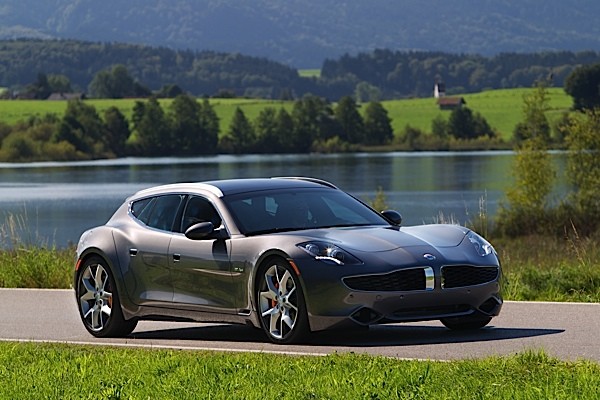
Fisker just unveiled this new five-door at the 2011 Frankfurt Motor Show and, while it’s based on the Karma (that has just finally entered full production), as you can see it’s grown a bit. It’s a five-door version of the iconic shooting brake body style (a three-door sporty hatchback) that houses the same series hybrid powertrain that powers the Karma. That means 80km (50 miles) of pure electric driving and, thanks to the gasoline motor in there that acts as an onboard generator, you can go up to another 400km (about 250 miles).  Full press release below:

2012 Fisker SurfUncompromised Responsible LuxuryTM meets Active, Eco-friendly Lifestyle


“With the Surf, Fisker has created a unique cross between a luxury sports car and a station-wagon.” Henrik Fisker, CEO/Executive Design Director, Fisker Automotive

In a design masterstroke, Fisker Automotive has created a completely original vehicle: the first electric luxury/sports automobile for an active and eco-friendly lifestyle. The Fisker Surf builds on the success of the ground-breaking Karma Electric Vehicle with extended range (EVer™) by adding additional, flexible load-carrying capability, along with a spirited new attitude all its own. Fisker Surf combines performance, luxury, style, utility, and economy with an enduring concern for the sustainable use of resources and respect for our natural environment. As a global company Fisker Automotive will offer the Surf in all its markets around the world for the 2013 model year. The Fisker Surf will create a new niche and open new customer markets for Fisker, by appealing to those looking for this unique blend of advanced technology, innovative design and environmental sensitivity, with added versatility. Europe, in particular, has demonstrated a historic fondness for sport-wagon design, and it is there where Fisker anticipates strong demand. The Fisker Surf is the first vehicle of its kind and a radical departure from traditional vehicles offered by other manufacturers. It brings added energy to Fisker’s focus on Uncompromised Responsible LuxuryTM and Pure Driving PassionTM.

Exterior DesignVery early in the development of the original Karma sedan, company CEO and Executive Design Director, Henrik Fisker decided a more versatile variant would be part of the model lineup. So when the time came for the evolution from Karma to Surf the path had already been defined for combining utility with bold and striking design.In mid-2009, with the Karma’s design settled, preliminary work began on the Surf. Using the Karma as a starting point, lines and angles around the rear quarters were extended for the new roof contour, side window shapes and liftgate. The design result is perhaps the most elegant production sport-wagon ever made. “The Surf is a first-of-its-kind eco-friendly lifestyle vehicle that offers space, performance and luxury design for people who live an active, environmentally conscious lifestyle and like to drive beautiful cars,” said Henrik Fisker. A five door vehicle has never looked this sporty with its voluptuous sculptured rear fenders and dynamic side profile. The rear end of the Fisker Surf flows elegantly around to the side of the car with an artfully incorporated roof spoiler adding to the drama of the rear end. The liftgate itself is quite a sophisticated piece, combining utility with an aerodynamic form styled for a distinctive flair. Even the high-mounted LED brake light is seamlessly integrated into the rear hatch and nearly invisible until it illuminates. Stunning new wheels – still of 22 inch diameter as standard — are an evolution of the Karma’s Circuit BladeTM design, and quite intricate. They make use of a two-color paint scheme separated by machined areas. The bright orange Brembo® brake calipers, exclusive to the Fisker Surf, show boldly through the wheels. At the front of the car, designers took the opportunity to create a sporty identity for the Surf with a new three-dimensional honeycomb pattern grille. The unique solar roof panel that is a Fisker signature has been integrated into the Surf, with a few twists. The optional solar panel not only captures sunlight to power the car, it is actually see-through, with a dark-tint translucence that adds to the sense of openness inside the car, specifically in the rear seats. Standard is a tinted-glass panoramic roof panel that tilts open at the back for added ventilation.Integrated roof rails allow for added cargo capacity and have been designed to suit the style of the car. While the overall stance and dimensions of the Fisker Surf are unchanged from those of the Karma sedan, the new car appears longer and sleeker with its extended roofline and side glass. The Surf is Fisker’s vision of a crossover between a sport car and a station wagon and shows how Fisker is expanding its Karma platform rapidly with additional models that again create a new market niche.

Interior DesignA strong sense of luxury and style compliments the Surf’s flexible capabilities, thanks to the beautifully integrated rework of the luggage and rear passenger areas. Once again, the Karma sedan provided an excellent foundation, with its handsomely crafted interior and thoughtful amenities. The Surf creates its own distinctive identity in the details of its beautiful, versatile cabin.The cargo area accessed by the Surf’s new liftgate is divided into three functional regions, starting with the trunk space at the rear, for large items such as golf bags and suitcases. Set off forward of that is a raised shelf designers refer to as “the podium,” to handily accommodate smaller objects and give useful function to an area constrained by the presence of the electric powertrain’s large invertors under the floor. A third region of the cargo area is created by the individual folding rear seatbacks. Either or both can flip forward to accommodate additional or oversize luggage or gear.The Surf’s center console between the rear seats, under which the car’s main battery is located, also incorporates an additional storage bin. Fisker’s design philosophy is evident throughout the Surf’s new interior. In addition to integrating the company’s signature diamond motifs, there was a clear determination to not settle for the ordinary. The divider panel between the trunk space and the podium is a richly crafted piece with cast aluminum, brushed plating and netting inspired by a high-end catamaran. Similarly, the innovative latch handles to release the rear seat backs are leather-trimmed and developed for their tactile feel. They mirror the fittings on fine designer luggage. Passenger accommodations take advantage of the Surf’s new roof contour. Headroom is increased significantly in back, thanks to both the higher roofline and the absence of headliner under the tinted glass or solar-electric roof panels. Larger side-window areas also allow improved outward visibility and add a sense of openness. It’s the perfect place to enjoy the active-sports lifestyle that the Surf both expresses and enables.

Technology and Performance The Fisker Surf takes full advantage of the advanced, high-efficiency powertrain and the innovative space frame architecture of the Karma sedan it is based on. Mechanically, the cars are virtually identical.As the first true electric vehicle with extended range (EVerTM), the Karma – and now the Surf – use an innovative series-hybrid drive system in which the car is powered only by electrical energy. The onboard gasoline engine drives only a generator. A pair of powerful electric traction motors drive the rear wheels, taking energy from a 20 kWh lithium-iron-phosphate battery pack carried inside the car’s central tunnel. A 175kW generator supplies energy to the motors and the batteries. It is driven, only when needed, by the efficient 260 hp turbocharged and direct-fuel-injected gasoline engine. So just like a diesel-electric locomotive, the Surf driver always enjoys the instantaneous torque and smooth response, while the internal combustion engine coupled to the electric motors provide increased energy for maximum performance and extended range.Two driving modes, Sport and Stealth, are available to the driver at all times. In Sport mode, full power is available and the driver can command the unmatched 981 lb-ft (1,330 Nm) of torque to accelerate from 0-60 mph in just 5.9 seconds, and achieve an electronically limited top speed of 125 mph (201 kmh).In the default Stealth mode, calibrated for efficiency, the Surf uses only battery power and accelerates from 0-60 in 7.9 seconds. Top speed is 95 mph (153 kmh). Under normal driving conditions, battery power alone will drive the Surf about 50 miles (80 km). After that the gasoline engine/generator and 9.5-gal (36 l) fuel tank provide another 250 miles of range for a total of 300 miles (483 km). Using a standard 110-volt household supply, the Surf’s battery will fully recharge in about 14 hours. The Fisker Surf can also utilize standard European 220-volt outlets, allowing this time to fall to about six hours. The Surf and Karma share an innovative architecture that helps deliver sparkling performance while ensuring confident control and a quiet, comfortable ride. The rigid aluminum structure, long wheelbase, sophisticated independent suspension and standard 22-inch wheels form the basis of a lithe, supple and responsive road car. A low center of gravity and 47/53-percent weight distribution help impart a sporting feel. The massive Brembo brakes work in conjunction with a fully blended regenerative system. During stops, energy that would otherwise be lost as heat is seamlessly recovered and fed back into the battery to help extend range and maximize efficiency.

SustainabilityLike everything Fisker Automotive does, the Surf has been conceived and developed with a consistent focus on sustainability. That means the car runs cleanly and efficiently, of course. But beyond that, its design and manufacture look to low- environmental-impact alternatives at every opportunity. The Low-Carbon LeatherTM used in the EcoSportTM interior trim comes from Bridge of Weir, a unique low-emissions and energy self-sufficient tannery in Scotland. EcoStandardTM and EcoChicTM interiors use entirely animal-free materials. Wood for the interior highlights is reclaimed from sunken logs and fire-damaged trees, not cut from living forests. Recycled, reusable and low-impact materials are used for seat cushions, carpet backing, trim pieces and more. By adamantly pursuing ways to raise efficiency and reduce environmental impact, Fisker Automotive is striving to be the automaker most dedicated to sustainability.With the stunning new Surf, Fisker has an automobile that expresses the values of an active, environmentally responsible lifestyle better than anything else on the market today.

Engadget previews Ferrari’s future hypercars at the World Design Contest (video)

ferrari-competition-fixed2011-07-19-600-41[1]

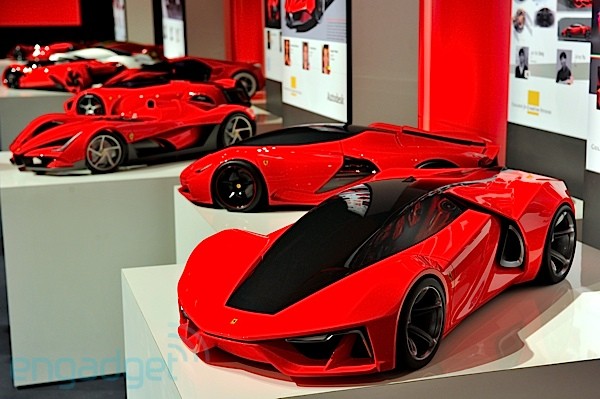
Although not completely related to auto parts, Engadget has an interesting read about cars in 20 – 30 years. They specifically look at what Ferrari calls the Hypercar.  A brief Snippet is below and a link to the full article on Engadget.

“Ferrari’s been one of the most respected car manufacturers in the world since the 1940s, but it hasn’texactly gotten there by being bleeding-edge. In the early ’60s, when rear-engined cars were sweeping the charts in Formula One, Il Commendatore — Enzo Ferrari — refused to take one racing, famously saying “the horse doesn’t push the cart along with its nose.” It would take many humiliating defeats before his company would finally put that horse where it belongs. Being an early adopter, obviously, was not a priority. It’s only in the past few years, with cars like the Enzo and 458 Italia, that Ferrari has truly embraced modern ideas of whizz-bang tech to make their cars genuinely faster — not just easier to drive.

That’s just the beginning. Automotive technology is finally starting to accelerate the way personal computing devices have for the past few decades. New means of propulsion are combining with ever-greater integrated systems and it’s easy to see this as leading us toward a generation of cars faster and still more efficient than anything we’ve yet seen on the roads. Ferrari calls this four-wheeled singularity the “hypercar,” and to get an idea of just what that car of the future might look like it invited 50 teams of designers from major universities around the world to compete. Join us as we look at some of the best creations.”  more….

Switch to our mobile site