Monthly Archives: January 2011

New Side Air Bag Regulation Aims to Save Lives

Side Air Bags

As part of its mission to prevent deaths related to rollovers, the National Highway Traffic Safety Administration (NHTSA) has recently announced the approval of the regulation that aims to increase safety standards through compeling automakers to install better side airbags, particularly for vehicles 10,000 pounds or less.  The first phase of implementation will begin in 2013, while all vehicles are expected to be covered by 2018.

Based on expert studies, rollovers are one of the leading causes of vehicle-related deaths.  In 1999 alone, over 8,000 fatalities were caused by rollovers, and about 47% of those are killed by being ejected after the crashes. 

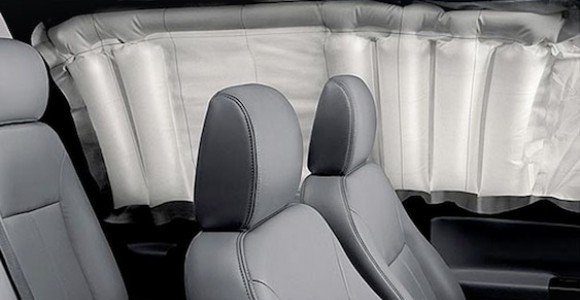
Through this proposal, the government wants to prevent the chance of drivers and passengers being ejected during a rollover.  With bigger airbags, there will be more coverage to the window opening, and since they will also have stronger quality, they will remain inflated longer and keep the passenger from being ejected through the side windows.  Moreover, this regulation is one of the most inexpensive ones for automakers and buyers, as it will add only an estimated $31 per vehicle. 

Automakers are currently reviewing the regulation; however, the Alliance of Automobile Manufacturers has already expressed their support to this regulation.  Representing Detroit’s Big Three, Toyota, and other top automakers, Wade Newton said “We certainly agree with NHTSA’s conclusion that head protecting/rollover airbags are the safest way keep people inside their vehicles when a rollover occurs.”

If you would like to purchase high quality airbags and other car parts with great discounts, check Autopartsway.com.

Chevrolet Rolling Out the Volt by End of 2011

volt

Today Chevrolet has confirmed that the Volt will be available nationwide by end of 2011. Read full press release blow.

Chevrolet Volt Rollout Speeds Up: Available Nationwide By End of 2011

2011-01-27 – DETROIT – Chevrolet is stepping up the national rollout of the Volt to match customer interest.

“We’re accelerating our launch plan to have Volts in all participating Chevrolet dealerships in every single state in the union by the end of this year,” said Rick Scheidt, U.S. vice president, Chevrolet Marketing. “This is the right thing to do for our customers and our dealers who are seeing increased traffic onto their showroom floors.”

Chevrolet Volts have been delivered to customers in the Washington D.C. area, as well as California, New York, Connecticut, New Jersey and Texas. Customer deliveries in Michigan begin this spring.

Customers nationwide will be able to order Volts with participating dealers beginning in the second quarter. Deliveries will begin in Virginia, Maryland, Delaware, Pennsylvania, North Carolina, South Carolina, Georgia, Florida, Oregon, Washington and Hawaii in the third quarter.

During the fourth quarter, Chevrolet expects to deliver Volts in all 50 states.

The decision to accelerate the national rollout was influenced by Chevrolet dealers like Criswell Chevrolet in Gaithersburg, Md., which has seen a surge of consumers interested in the Volt.

“The Volt is clearly bringing new customers to Chevrolet,” said Harry E. Criswell III, president and owner of Criswell Chevrolet “We are seeing 10 to 15 customers a week who are seriously considering buying a Volt. Many of them own competitive brands and now have a Chevy on their shopping list because of the Volt.”

Some of that consumer interest has been fueled by prestigious industry awards and recognitions for the Volt, including:

2011 North American Car of the Year
Motor Trend 2011 Car of the Year
Green Car Journal 2011 Green Car of the Year
Car and Driver 10 Best for 2011
Ward’s AutoWorld 10 Best Engines for 2011
AUTOMOBILE Magazine 2011 Automobile of the Year
2010 Breakthrough Technology, by Popular Mechanics
“Such recognition provides customers with credible, expert endorsement of new models, which is important for vehicles like the Volt that feature significant new technologies,” said Scheidt. “Based on the awards the Volt has received, and the number of consumers expressing interest in the technology, we believe the Volt is the right car at the right time.”

The Volt is an electric vehicle that offers a total driving range of up to 379 miles, based on EPA estimates. For the first 35 miles, the Volt can drive gas- and tailpipe-emissions-free using a full charge of electricity stored in its 16-kWh lithium-ion battery. When the Volt’s battery runs low, a gas-powered engine/generator seamlessly operates to extend the driving range another 344 miles on a full tank.

# # #

About Chevrolet

Founded in Detroit in 1911, Chevrolet celebrates its centennial as a global automotive brand with annual sales of about 4.25 million vehicles in more than 120 countries. Chevrolet provides consumers with fuel-efficient, safe and reliable vehicles that deliver high quality, expressive design, spirited performance and value. The Chevrolet portfolio includes iconic performance cars such as Corvette and Camaro; dependable, long-lasting pickups and SUVs such as Silverado and Suburban; and award-winning passenger cars and crossovers such as Spark, Cruze, Malibu, Equinox and Traverse. Chevrolet also offers “gas-friendly to gas-free” solutions including Cruze Eco and Volt. Cruze Eco offers 42 mpg highway while Volt offers 35 miles of electric, gasoline-free driving and an additional 344 miles of extended range. Most new Chevrolet models offer OnStar safety, security and convenience technologies including OnStar Hands-Free Calling, Automatic Crash Response and Stolen Vehicle Slowdown. More information regarding Chevrolet models can be found at www.chevrolet.com.

10 Tips for Stretching Your Fuel Mileage

save fuel

In this day and age, the price of fuel has surely gone up, and it is probably safe to say that this trend will continue in the coming years.  Considering the rising prices of almost every other commodity, it is very important to know how to save and manage our budgets.  If you’re the type who drives your car every day (or as often as you can), you should know that stretching your fuel can not only save you extra money, it can also stretch the life of your car.

So, here are the top ten simple things that you must keep in mind to get more gas mileage:

  1. Drive smoothly.  You should avoid heavy acceleration and sudden braking.  Extreme speeding, as well as rapid velocity changes can lower your gasoline mileage by 5%, when you are at lower speeds around a town, or even 33% when you often drive through highways and expressways.  Try to maintain constant speed as often as you can and use cruise control in major roads and free-flowing traffic.
  2. Keep air filters clean.  If you replace your dirty and clogged air filters, it can improve gas mileage by 10%, as the air filter can protect the engine from impurities that would make it work extra hard, requiring more gas power.
  3. Keep a well-tuned engine.  If your car has failed emission tests, is obviously out of tune, or has any problem that needs repair, you should solve the problem immediately.  On average, this can improve your mileage by 4%.
  4. Make sure tires are in good condition.  The correct amount of tire air pressure can cut down on the fuel you use while driving by more than 3%, so always check that your tires are not over or under-inflated.
  5. Use the recommended grade of engine oil.  Always follow your manufacturer’s specifications for the required motor oil to gain 2% increase in mileage.  It will also help to choose the motor oil that is labeled “energy-conserving”, as these types contain friction-reducing additives.
  6. Choose a high-quality gasoline.  Top automakers claim that some carbon deposits may build up on critical engine parts, and this can decrease the power, performance, and fuel-efficiency of your vehicle.  Audi, BMW, General Motors, Honda, Toyota, and Volkswagen, among others recommend top tier detergent gasolines to help keep engines clean.  These high quality gasolines stop gunk build-up, resulting in the best possible car performance.
  7. Minimize vehicle drag.  Do not take unnecessary items that add more weight and not much importance.  Keep your trunk and back seat clear of anything you don’t need.  A heavier car with excess weight will require more power.
  8. Avoid idling.  Don’t think that if your car isn’t speeding, it can’t use gas.  Even when your car is idle, you can actually get zero miles per gallon.
  9. Avoid higher speeds.  On the other side of the coin, avoid driving at very high speeds when not completely necessary.  Gas mileage decreases when you drive at speeds over 60 mph and beyond.
  10. Plan your trips wisely.  Combining small errands and avoiding separate trips lessen unnecessary cold starts.  This is a good way to keep your engine running warm and more efficiently.

With these tips, not only will you be able to save more money on fuel, but also keep your car’s components in good condition.  To get hold of high-quality parts with great discounts, check Autopartsway.com.

Things to Know About the Flywheel

flywheel

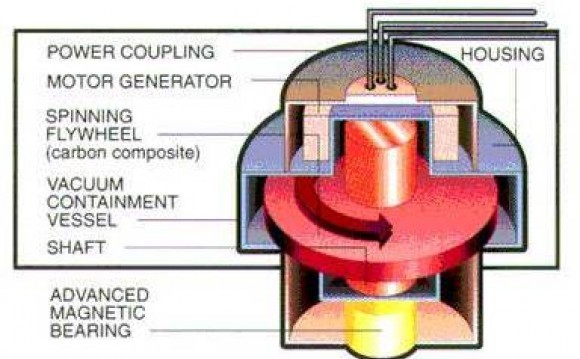
In its simplest sense, a flywheel is any rotating disk that is installed to collect and supply energy to any system by storing this energy in the form of rotational kinetic energy.  A rotating flywheel responds to any momentum that tends to change the direction of its rotation axis by a resulting processing rotation.

If you are no physics guru, just think of the ancient time’s common example: the potter’s wheel!  This has inspired the technology that came to be the use of flywheels in cars.  As another example, think of the good old “Smash-up Derby Cars” which were famous children’s toys in the 1970’s and 80’s.  These toy cars would race towards one another with great speed, only to hit each other, and then the pieces would fly off.  The children would then collect the pieces, reattach them to the cars, and then prepare them for another collision.  The players would have tons of fun, without fully understanding how the toy cars moved without pushing them.  The answer: the humble flywheel design.

How does it work?

Flywheels are small motors that rotate through the help of magnets.  The flywheel, rotor or sprocket is held still by a flywheel holder while you remove or tighten the nut keeping each of them in place.  The holder often looks like a bar with clamps at either end.  These holders are also useful for other equipment or vehicles with small engines like lawnmowers, scooters, motorcycles, etc.

In the center of the car, you can find a single wheel that is free to rotate with the axle perpendicular to the direction that the car is facing.  If you give this a push, it would roll.  For best results, you must place a specially-designed cord in the hole and pull it out quickly. This cord is attached to a gear on the side of the flywheel.  When this cord is pulled, the gear will rotate and the flywheel will power up.  When the flywheel is spinning, you have the simple flywheel engine.  It simply refers to the locomotion for the vehicle.

Choosing and replacing flywheels

Step 1.  Before purchasing a new part, make sure you know the correct make and model of your vehicle.  This will help you determine which size and style of flywheel to buy.  Holders come in various sizes, so as small as your flywheel motor is, you should know the specific size you need.

Step 2.  Check and remember the size of your flywheel, to know and buy the flywheel holder with the correct edge that best fits it.

Step 3.  For flywheels that are bigger than 6 3/8” in diameter, it is recommended to use a block of wood as support.  It is rather difficult to find a flywheel holder that adjusts to a size that is larger than that.

Step 4.  Using a socket wrench, turn the nut, but make sure you keep the flywheel steady using the holder.  While you are turning it, you may feel some resistance, and this is normal.  This force is due to the flywheel’s magnetic pull.

Step 5.  If you are loosening left-handed nuts, you must do so in the opposite direction of standard nuts.  When the nut is loosened, you may remove the flywheel holder.

Step 6.  Then, place back the flywheel and reposition the holder to keep the flywheel stable during the nut replacement, when you are finished making your repairs.

Note that you must be careful in performing any of these steps.  Also, make sure that you purchase only the best quality parts.  To find such parts, plus great discounts, check out Autopartsway.com.

Volvo Set to Unveil V60 Plug-in at Geneva

PHEV V60

Today Volvo has announced it will unveil the PHEV V60 in Geneva in March before releasing it for sale in 2012. With a full charge the PHEV V60 will offer 50km (31 miles) on electricity alone which is about the same as the Chevy Volt. This is possible by the 70hp electric motor mounted in the rear and driving the wheels out back courtesy of a 12kWh Li-ion battery pack. In the front the PHEV V60 is outfitted with a 215hp, 2.4 liter, five-cylinder turbodiesel.

Look below for a full press release.

The Volvo V60 Plug-in Hybrid
- another world-first from Volvo Car Corporation

At the 2011 Geneva Motor Show, Volvo Cars will be unveiling the V60 Plug-in Hybrid – a virtually production-ready car with carbon dioxide emissions below 50 g/km, which translates into fuel consumption at 1.9 l/100 km.
In 2012 Volvo Cars will be the first manufacturer on the market with this new breed of hybrid – which is the result of close cooperation with the Swedish energy supplier Vattenfall.

The V60 Plug-in Hybrid features the very best properties from three different car types in one, single attractive sports wagon. This includes a possibility for the driver to drive up to 50 kilometres on pure electricity.
“This second-generation hybrid is the perfect choice for the uncompromising buyer who wants a superbly carbon dioxide-lean car packed with driving pleasure,” says Stefan Jacoby, President and CEO of Volvo Cars.

D5 engine and Electric Rear Axle Drive
The front wheels of the V60 Plug-in Hybrid will be driven by a five-cylinder 2.4-litre D5 turbodiesel, which produces 215 horsepower and maximum torque of 440 Nm. The rear axle features ERAD (Electric Rear Axle Drive) in the form of an electric motor producing 70 horsepower, which receives its power from a 12 kWh lithium-ion battery pack. The car features a six-speed automatic transmission.

“In order to get true car enthusiasts to think green, you have to offer them the opportunity to drive with low carbon dioxide emissions without taking away the adrenaline rush that promotes genuine driving pleasure. The V60 Plug-in Hybrid has all the traditional properties of a genuine sports wagon. What we’ve done is to spice it up with spearhead technology,” says Stefan Jacoby.

The Volvo V60 Plug-in Hybrid will be revealed at a press conference in Geneva on March 1st 2011.

Volkswagen’s 313MPG XL1 Concept Plug-in Diesel Hybrid

XL1 Concept

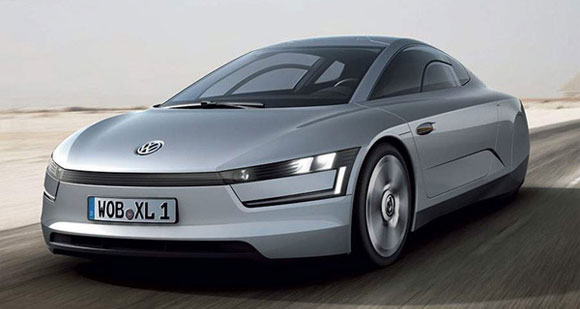
Volkswagen has just announced the 313MPG XL1 Concept Plug-in Diesel Hybrid. Although we are sure there is some questionable math what gives the XL1 the 313MPG fuel efficiency, driving could become much more efficient. While producing only 24g of CO2 per kilometer traveled, Volkswagen focused on making this concept car as light and aerodynamic as possible. With only a 795kg curb weight, the XL1 is constructed using carbon fiber, magnesium, ceramics, and aluminum.

Check below for the full press release.

Volkswagen unveils the XL1 Super Efficient Vehicle in Qatar

The new Volkswagen XL1 Super Efficient Vehicle (SEV) has been unveiled at the Qatar Motor Show. Pioneering construction techniques, an advanced plug-in hybrid drivetrain and innovative packaging all play a part in allowing the XL1 to return 313 mpg on the combined cycle while emitting 24 g/km of CO2 to set a new benchmark for vehicle efficiency.

Powering the XL1 is a compact 800 cc TDI two-cylinder common rail diesel engine developing 48 PS. It’s linked to an electric motor producing 27 PS, resulting in a total of 75 PS – a modest output yet more than enough when the low kerb weight (795 kg) of the vehicle is taken into account.

The TDI engine is linked to an electric motor and a seven-speed DSG gearbox with an automatic clutch mounted between each unit. The electric motor can either work independently of the TDI engine or in tandem when accelerating. In pure electric mode the XL1 can travel up to 35 km before the diesel engine cuts in. Accelerating from rest to 62 mph can be achieved in 11.9 seconds; the electronically limited top speed is 99 mph.
XL1 Concept Side-Back

In both its styling and packaging the XL1 draws on lessons learned from the 1-Litre car (2002) and the L1 concept (2009). The XL1 has evolved to feature staggered seating with the driver and passenger placed next to each other in a body structure made from advanced new materials providing immense strength yet weighing just 230 kg.

To make such weight savings possible, and yet viable for series production, Volkswagen developed and patented a new system for the manufacture of the Carbon Fibre Reinforced Polymer (CFRP) parts on the car called the Resin Transfer Moulding (RTM) process.

In total the XL1 weighs 795 kg. In addition to the body structure, the weight is accounted for by the drivetrain (227 kg), the running gear (153 kg), the interior including a pair of bucket seats (80 kg) and the electrical system (105 kg). In total just 23.2 per cent of the car (184 kg) is made out of either steel or iron.

Further savings are made through the extensive use of lightweight materials including magnesium (wheels), ceramics (brake discs) and aluminium (dampers, steering system, brake calipers).

The styling of the XL1 is borne out of functional requirements – easy access to the interior is granted via a pair of elegant scissor doors that hinge on the A-pillar while the profile of the car has been honed in the wind tunnel, the result being a remarkable coefficient of drag figure of 0.186. The XL1′s overall length (3,970 mm) and width (1,682 mm) are similar to those of a Volkswagen Polo yet its height (1,184 mm) is more akin to that of a Lamborghini Gallardo Spyder.

Although the XL1 is still very much a concept, its unveiling marks the next step towards the birth of a new class of Super Efficient Vehicles, while the advent of a process such as RTM is a significant milestone.

GM CEO Reveals New Customer-Focused Strategy

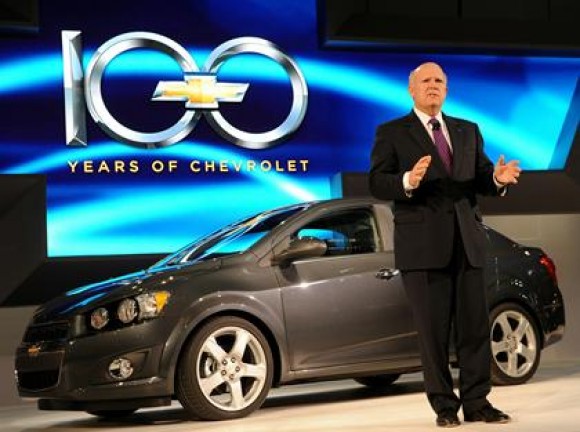
GM's Dan Akerson

In the last two decades or more, the senior managers at General Motors Co. have had their focus on making products that fit the production capabilities of their plants, rather than highlighting the needs and wants of their customers. Then came the heavy debt load and ballooning costs of health care, as well as the surplus of well-paid workers—GM was in deep trouble.

But after this much talked about bankruptcy and the much needed restructuring that followed, GM was able to get rid of the many contractual and financial obligations that were weighing this automotive giant down.

Now, its new CEO Dan Akerson is initiating a major shift in focus: a customer-centric orientation.

The new direction means that GM is now free to design cars that appeal directly to customers. With its recent recovery in sales, the company can now introduce new models faster, as well as strengthen its overall advertising efforts and reinforce GM more as a marketing organization.

Joel Ewanick, GM’s first ever Global Chief Marketing Officer, claims that this shift in focus is a rare opportunity that GM is capitalizing on now that they have the momentum of having rising profits (after six years) and newly-introduced models that have become sales hits. They are hoping this momentum would drive them to build cars that people would want to buy, rather than cars that the company needs to sell. This new appointment is just one of Akerson’s strategies to reshuffle GM, which has had four CEOs in less than two years.

Ewanick has been known mostly for building Hyundai’s growing presence in the U.S., and his new task at GM is to elevate the consumer’s point of view into GM’s product planning and strategic decisions, gathering top management support along the process. Also part of this new job is to gather customer feedback through his staff and communicate these to the product team.

Some of the results of the focus group discussions initiated by Ewanick include bolder style and design improvements to grab the attention of the more modern buyers of today. Part of this will be adding more creature comforts and innovative parts throughout the car. Another is the direction to officially move Buick from the “near luxury” to being a luxury brand. Now, Buick is set to directly compete against Lexus, with an understated luxury approach.

Of course, even with all these improvements, GM still has a long way to go if they want to regain the leadership that they have held and lost.

Still, it is worth seeing what this determined automaker has in store for the next couple of years, both in terms of its revised strategies as well as its new product offerings.

If you would like to buy high quality parts with great discounts for your GM or other top auto brands, check out Autopartsway.com.

Taking Care of Your Car Filters

air filter

All good drivers should know the importance of the filter parts in cars.  Keeping them clean and in good condition is essential for the car to function properly.  It is just like wearing masks when you don’t want to be contaminated by harmful dust or other substances.  In other words, taking care of your car’s filter parts will keep your car healthy.

All car filters contain filtering elements that are made from different materials.  These are as various as cloth fibers, paper fibers, wire mesh screens, or even a combination of the three.  Most oil and fuel filters lodged within a metal container connected to the engine or fuel system.  These filters require regular maintenance, and some replacements.  Remember that a properly maintained filter system can enhance your car’s performance and add more years to your vehicle.

The basic filter parts are air filter, oil filter, fuel filter and cabin air filter.  As their name suggests, these parts filter and purify any gas or liquid that goes into the car engine.  If kept in good condition, they will protect the engine and improve its efficiency.  But although they are all filters, they have their own distinct qualities and it is good to be familiar with each one.

Air Filter

It is very simple to inspect the air filter, and usually it only requires about five minutes!  First, you must open the hood and find the air filter box, which is normally above the car battery.  If you remove the clips that hold the lid of the box, it will make for easier access to the air filter.  Then, you can check the filter to know if it needs to be replaced.  If you see some slight discoloration, this is still acceptable, but if the air filter is dusty and dark in color, it should be replaced to recondition the proper airflow in the car engine.

Air filters block the small debris and other particles and allow the filtered air to go into the engine.  If some dirt somehow enters the engine, it would cause premature failure. 

Oil Filter

Standard service and maintenance are essential for longer engine life.  Modern engines have more power which requires you to change oil at regular intervals.  Normally, these intervals are every 3,000 miles, or 3 months (whichever comes first).  If your car uses synthetic motor oil, you can extend the mileage and have oil change intervals up to 5,000 miles.  However, if you usually drive in dirty areas or extreme conditions, it is better to change the filters in shorter intervals than the ones presented here, even shorter than your manufacturer’s advice.  Keep in mind too, that you must always use your vehicle manufacturer’s recommended weight motor oil. 

Fuel Filter

Whether the car is in storage or used daily, a number of impurities and moisture can be mixed into the fuel supply system.  To change the fuel filter, you must remove the fuel filter from the fuel lines.  When the connections are removed, a small amount of fuel may leak out.  Then, you must remove the fuel filter, replace with the new one and recheck regularly for leaks.

Cabin Air Filter

The air inside your vehicle may actually have more pollutants that the outside air.  Air cabin filters are designed to help filter out smoke, fumes, odors, allergens, molds or any unwanted substances.  If you replace them regularly, they will help reduce the wear on your vehicle’s heating, ventilation and air conditioning system. 

To replace the air cabin filter, find and undo the retainer clip to remove the air cabin filter.  Then, recheck the filter size and compare with the replacement filter before placing the new filter.  Take note that you must clean the air cabin filter housing to help keep the vehicle inlet air clean.

If you keep these important information in mind, surely your car will run more efficiently and effectively.  These humble filters do wonders in taking care of your vehicle.  For the best deals on high quality filters, please check Autopartsway.com.

Tips and Terms for Smart Auto Parts Shopping

Sample Product Description - Autopartsway.com

Ever wondered or been confused about codes and acronyms when checking out auto parts online?  It can be difficult to find the best part if you do not fully understand what the terms mean.  Also, there are some misconceptions about some types of parts that may lead you buying the more inferior products.  So read-on and know the truth about the smart way to shop for auto parts.

Here are some basic terms to start:

  • Original Equipment (OE) – a generic term that refers to the brand that came as original equipment of the car, either manufactured by the carmaker, or made by a supplier, but ends of being branded with the carmaker’s name.    Note though, that most auto manufacturers assemble the cars from component parts that they purchase from suppliers, and mostly manufacture only their own sheet metal components. 
  • Original Equipment Manufacturer (OEM) – the company that manufactures the products or components that are purchased by the auto manufacturer.  In this case, the purchased parts are sold in retail under the purchasing company’s brand name.  OEM then specifies the name of the company that originally manufactured that product.
  • Original Equipment Supplier (OES) – Mostly the same with OEM, these are genuine parts manufactured by a company other than the auto manufacturer.  So, these parts are “supplied” by those original manufacturers, in those manufacturers’ brand names.  Examples of popular OEMs and OES are Bosch, Bilstein, Boge, and many others.
  • Aftermarket parts – These are non-OEM replacement parts that are not made by the car manufacturer.  They can be made by an OEM company, or by a completely different manufacturer.  These aftermarket manufacturers usually buy the rights to reproduce the same parts and sell them to the same distributors of the OEM/OES parts.  Although these companies are not associated with the car manufacturer, many aftermarket companies have proven to make parts of the same, sometimes even better quality, than the ones that originally come with the car, at a much lower price, through cutting the middlemen much like in OEM/OES.
  • Dealer Only Parts – Some parts, especially for cars which only 2 years or less, are only available through the car dealers.  This is because some OEM/OES companies cannot independently release the parts because of licensing agreements.  After a few years though, is when most OEM/OES companies are free to sell the very same parts under their names.  Although a bit inconvenient, buying dealer-only parts can be an advantage to the customer for warranty reasons, exceptionally if the car is very new.

 PROs

The most basic advantage of OEM/OES and Aftermarket Parts are the cheaper price, for some reasons:

  • OEM/OES parts are less expensive simply because they do not go through the car manufacturer’s parts system.  OE parts are more expensive because every time an OE part goes through the long process and many transfers from the OEM factory, to the warehouse or parts depot of the carmaker, to the dealer, to the customer, the cost of the part increases.  Put simply, buying OEM/OES parts cuts the “middleman” by buying the exact same parts from the original maker.
  •   Many people don’t know that many OEM/OES brands are not only normal, but in some cases, they are actually mandated by international standards as part of the qualifications for ISO certifications.
  • This is the same with Aftermarket parts.  Because they are sold by the part manufacturers, they are cheaper.   The advantage is that these cheaper, differently-branded parts will work just as well as the OE parts or other branded parts.  Technically speaking, there are some car parts that will perform similarly even with parts from different brands.
  • There are also aftermarket parts that are not OE, but have better quality than OE.  There are cases when the car manufacturer does not select a certain parts supplier, even when they produce the better product.  In this case, they are branded as aftermarket parts. A good example is Stewart EMP BMW water pumps.  Stewart EMP is not an OE, nor an OEM/OES, but the pumps they make are known and tested to be better and stronger than the BMW OE. 

 CONs

While it is completely acceptable and safe to buy aftermarket parts, be careful not to be “conned” by some knock-offs!  This is the biggest burden of reliable “aftermarket parts” companies.  There are some countries where reverse-engineered fake parts are not forbidden, and so there are some fake parts that hit some markets.   It is not rocket science:  if it’s a knock-off, it is probably made of substandard products that may harm instead of help your car.  If it’s a perfectly working, yet cheaper product, then they can be sold as they are, and not as fake goods.  There is a huge difference between big discounts made by OEM/OES and genuine aftermarket producers through cutting middleman costs, and knock-off parts that are way too cheap to be real. 

But although aftermarket parts sometimes receive a bad reputation because of those companies that make knock-offs, there are many more respected sources that make high quality aftermarket parts.  Autopartsway carries aftermarket parts only from these respected manufacturers, which add to a huge selection of OEM parts.  In addition, Autopartsway has excellent Customer Service Policies, valid shipping methods, secure and trusted payment systems that are proven by its many satisfied customers.

 With more than 4.2 million parts available, http://www.autopartsway.com/carparts.cfm is your trusted online parts source with incredible lowest price guarantees for genuine parts.  If you would like to be a smart shopper, look no further.  AutoPartsWAY.com is the best way to buy auto parts online.

Silver Tesla Model S Alpha Video (Yes it is that quiet)

tesla

Tesla just released a video of their Model S Alpha. Although not the first video of the car running, it gives us the best taste so far of that the car has to offer. And yes, it is that quiet. Scroll down for the video.

Model S Alpha Hits the Road from Tesla Motors on Vimeo.

Switch to our mobile site